Updated November 2, 2026
POSM stands for Point of Sale Materials, sometimes expanded as Point of Sale Marketing. It is everything a brand puts inside a store so that its product gets noticed and bought right there. In English it is also called POS material or POP, and in Spain and France the word is PLV.
In practice that means the floor display by the entrance, the card on the counter, the strip along the shelf edge and the illuminated sign on the wall. The acronyms get mixed up in briefs, so we put them side by side in a table further down.
At Euromon PLV we design and manufacture displays for cosmetics, pharmacy, food, DIY and housewares brands, and ship them worldwide from Barcelona. The pieces in the photos are ours, and we use them to walk through the most common types of POSM.
What is POSM?
POSM is the part of a brand's advertising that happens inside the point of sale, when the shopper already has the product in front of them. Its job is to make the shopper notice that product rather than the one next to it, understand what it is for and pick it up without hunting for it.
POSM covers very different pieces.
- Displays, floor or countertop, that hold and present the product.
- Shelf POSM fitted onto the store's own shelving: shelf-edge strips, stoppers, headers, price holders and frames.
- Printed signage, from counter cards to hanging signs, banners and vinyls.
- Light boxes, illuminated signs and neons.
- Plinths and glorifiers, which lift a single product so it stands out.
Advertising the shopper sees outside the store, like a billboard or a social media ad, is not POSM. Neither is the store's general furniture, which belongs to the retailer and not to a brand.
POSM vs POP vs POS vs PLV
They are different acronyms for nearly the same thing, and this is how each one is used.
| Acronym | Stands for | Where you will hear it | Same as POSM? |
|---|---|---|---|
| POSM | Point of Sale Materials, sometimes Point of Sale Marketing | Trade marketing briefs and plans of international brands | It is the term itself |
| POS | Point of Sale | As a synonym in "POS material" or "POS display". In a store it is also the card terminal at the till | Yes, when it refers to materials |
| POP | Point of Purchase | The most common term in the United States | In practice, yes |
| PLV | Publicidad en el Lugar de Venta in Spanish, Publicité sur le Lieu de Vente in French | Spain and France, and the one in our name | Yes |
POSMs is simply the plural, used when a brief lists several pieces.
What POSM means in marketing
In marketing, POSM is part of trade marketing, the work a brand does in the channel where its product is sold, usually agreed with the retailer or the distributor. It is used mainly for four things.
- Launching a product, so it can be seen from the aisle in its first weeks.
- Pushing a promotion with a start and an end date, such as Christmas or back to school.
- Organising a long range, so shoppers find their item without asking.
- Winning space away from the usual shelf, at the entrance, by the till or at the end of the aisle.
POSM that never makes it onto the shop floor is wasted money, so the practical side matters as much as the design. It has to fit through the door and go up without tools, and if the retailer sets dimensions, it has to meet them to the centimetre.
Types of POSM by how long they stay in store
Temporary POSM
It supports a campaign of a few weeks or months and is then removed. It is almost always made of cardboard, the cheapest material, which can ship flat or, the other way round, assembled and loaded with product so the store only has to put it in place.
Permanent POSM
It stays in the store for years. It is made of metal, wood, MDF or acrylic, it carries more weight and survives more handling, and the graphics can be updated without throwing the unit away. It is what we make most.
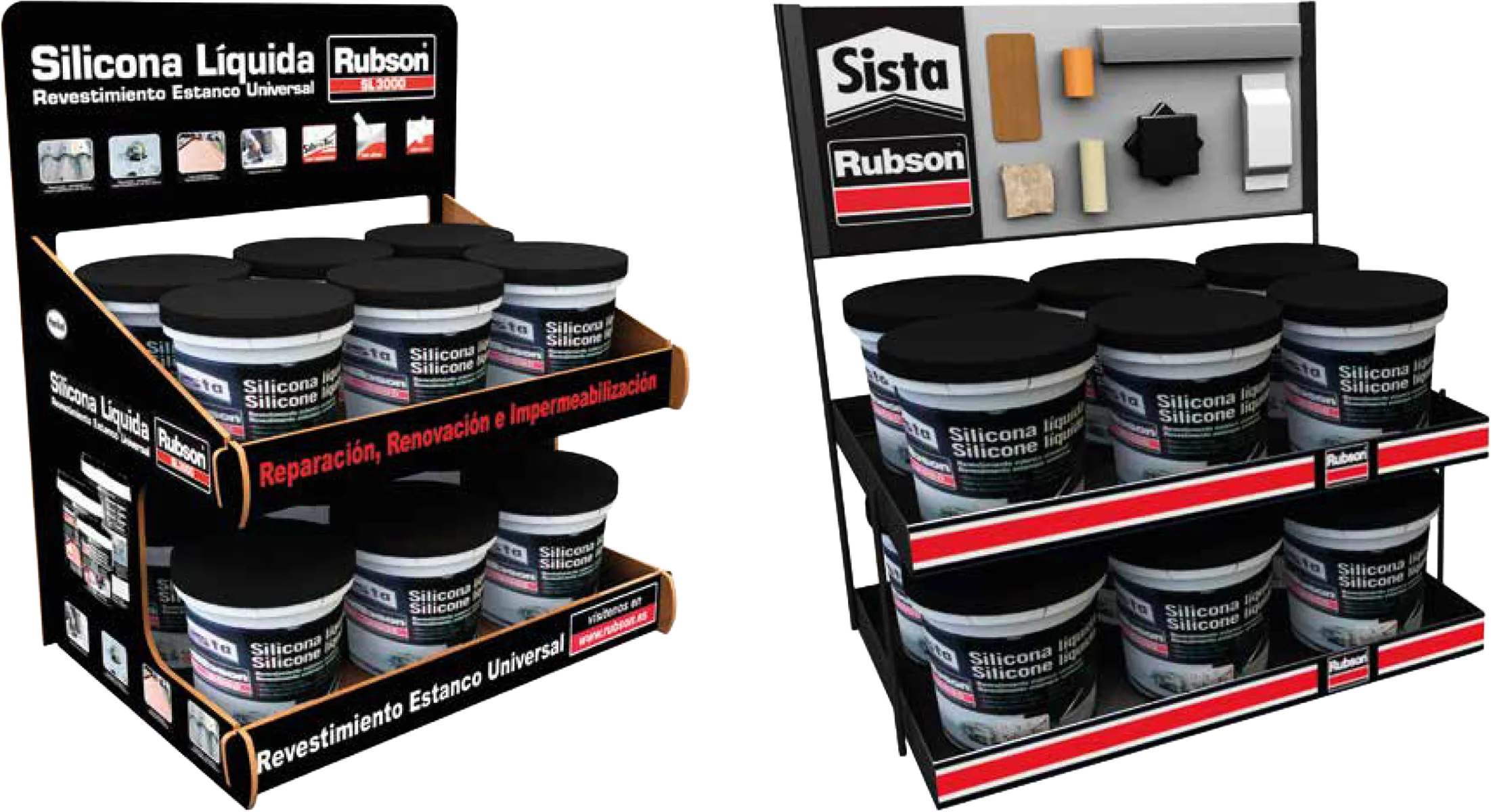
For Rubson's liquid silicone, Silicona Líquida, we made the same countertop display both ways. The black cardboard one, with its kraft edges showing, is for campaigns. The wire and sheet metal one, with the Sista and Rubson header, is designed to stay on the counter. Both carry two trays with six tubs on each level.
You may also come across passive POSM, which shoppers only look at, and active POSM, which they touch: a tester, a screen, a sample dispenser.
Types of POSM by where they go
Our page on POP display types shows every format with photos. These are the main ones, first at a glance and then one by one.
| Type | Where it goes | Usual materials | Example in this article |
|---|---|---|---|
| Floor display | On the shop floor, in the aisle or by the entrance | Wood, MDF, metal or cardboard | Arcos cookware display |
| Rotating tower | On the floor, where space is tight | Metal, acrylic or cardboard | Chupa Chups lollipop tower |
| Countertop display | On the counter or by the till | Cardboard, acrylic, metal or wood | Rubson Silicona Líquida, Pilexil |
| Shelf POSM | On the store's own shelving | Plastic, acrylic, cardboard or metal | Álvarez Gómez shelf frame |
| Pallet display, pallet box, gondola end | Promotion areas and aisle ends of large stores | Mostly cardboard | Tangit pallet |
| Signage and illuminated signs | Counter, ceiling, walls and windows | Printed card and vinyl, LED for light boxes and neons | Schwarzkopf Professional neon |
Floor displays and towers
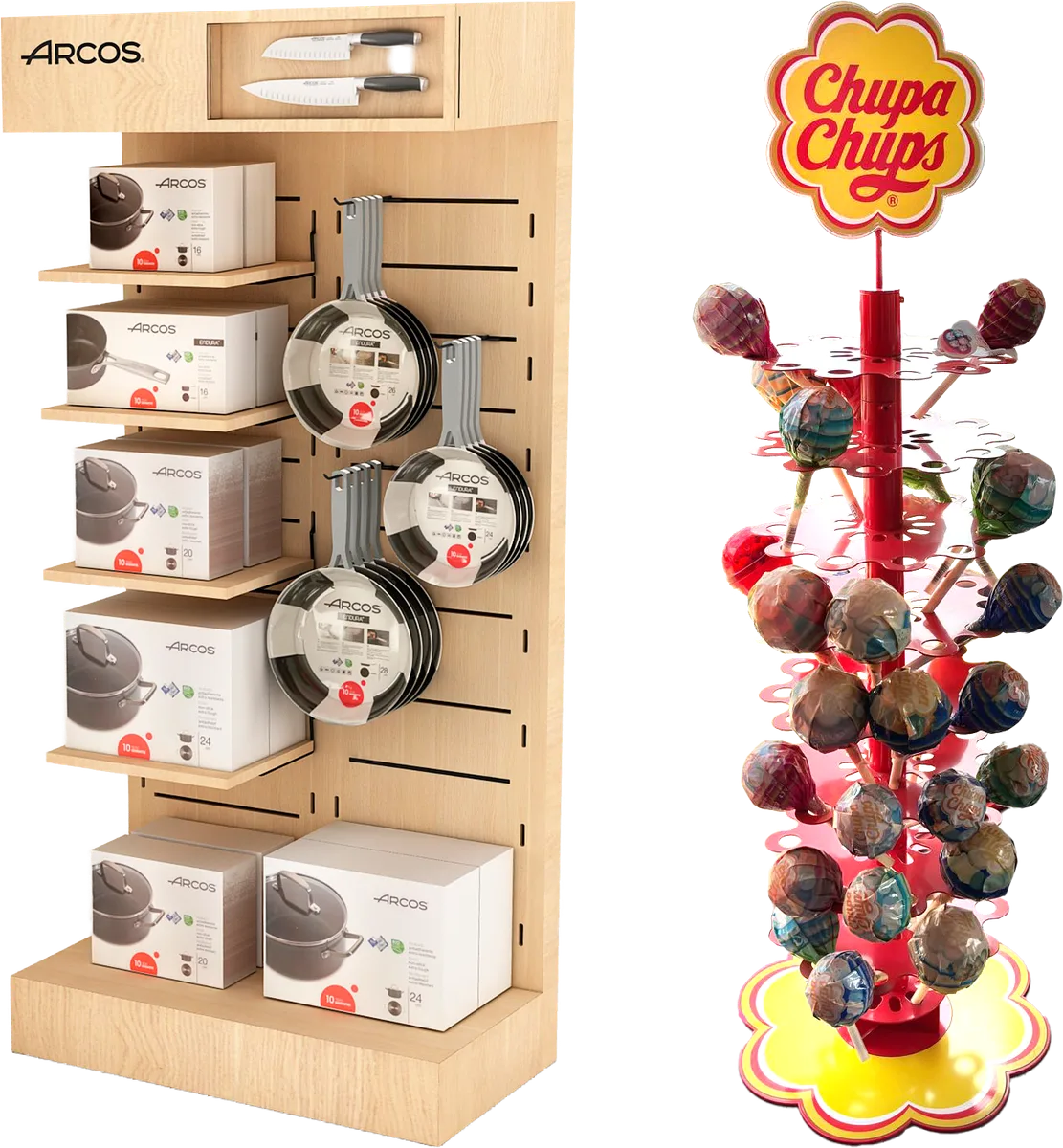
A floor display rests directly on the shop floor and brings the product up to hand height. It suits long ranges, large products or promotions that need to be seen from a distance. The one we made for Arcos, in wood, combines shelves for boxed cookware and hooks for frying pans on a single slatwall panel, and keeps the header for a small window with two knives.
Rotating towers are the narrow version. They take up very little space and are loaded with small impulse products, like the lollipop tower we made for Chupa Chups. We cover them in detail in our post on the tower display.
Countertop displays
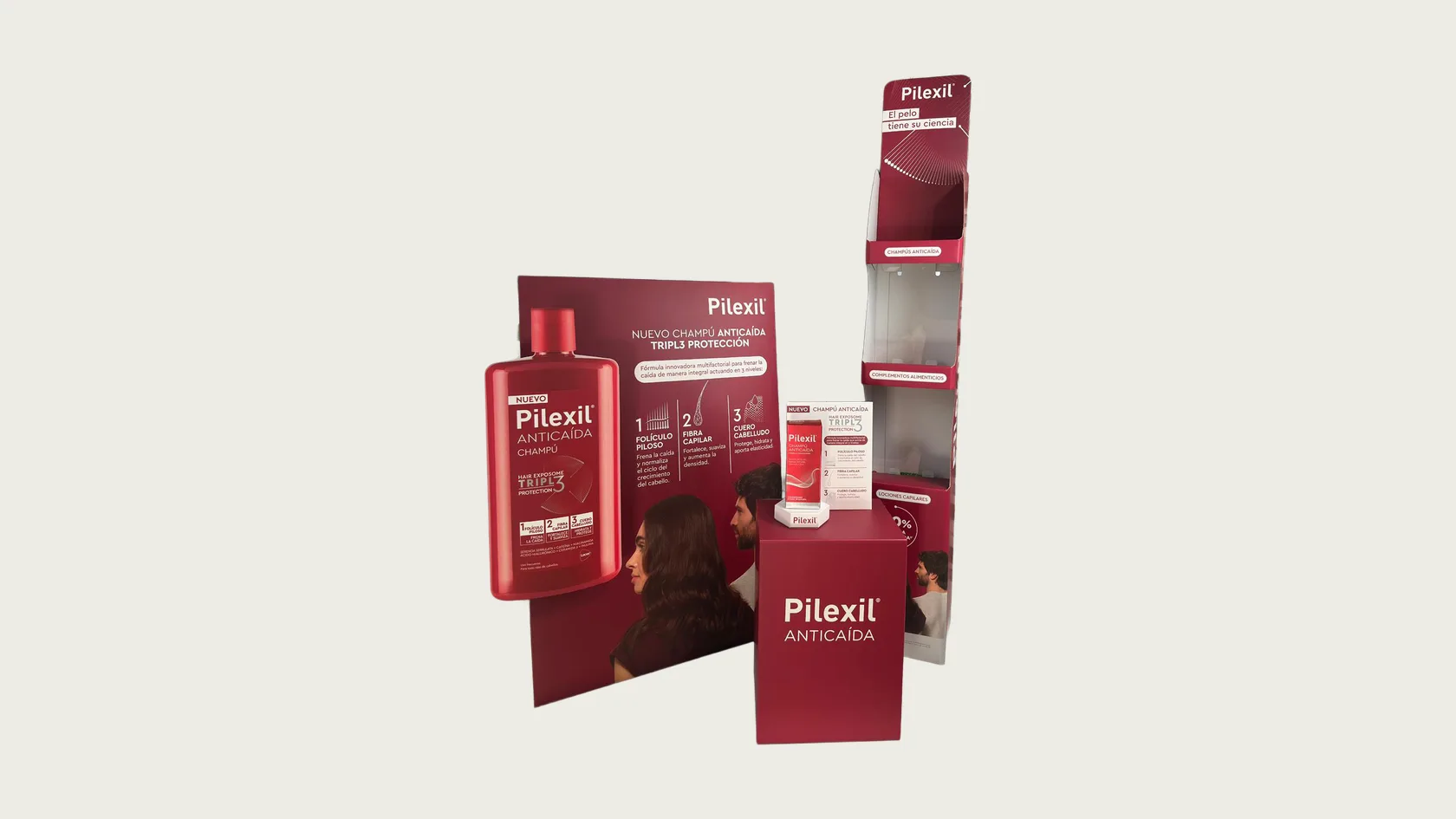
They sit on the counter or by the till, with small products people buy on the spot. Pharmacies use them a lot, because the counter is where products get recommended. The cover of this article is the Pilexil anti hair loss shampoo campaign: a large counter poster, a plinth with its small card and a cardboard floor display for the rest of the range, all with the same artwork. The sizes pharmacies usually accept are in our guide to pharmacy counter displays.
Shelf POSM
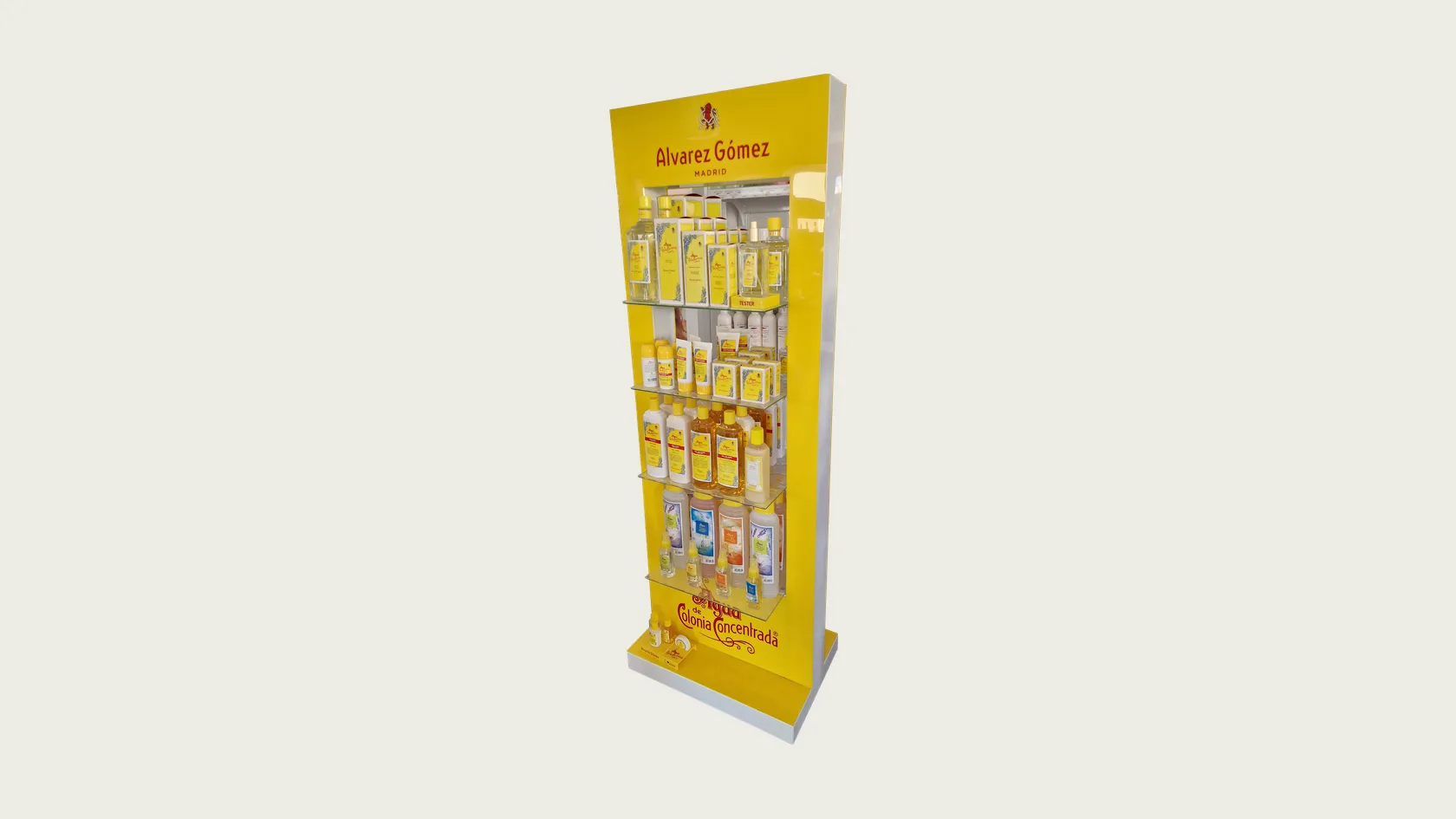
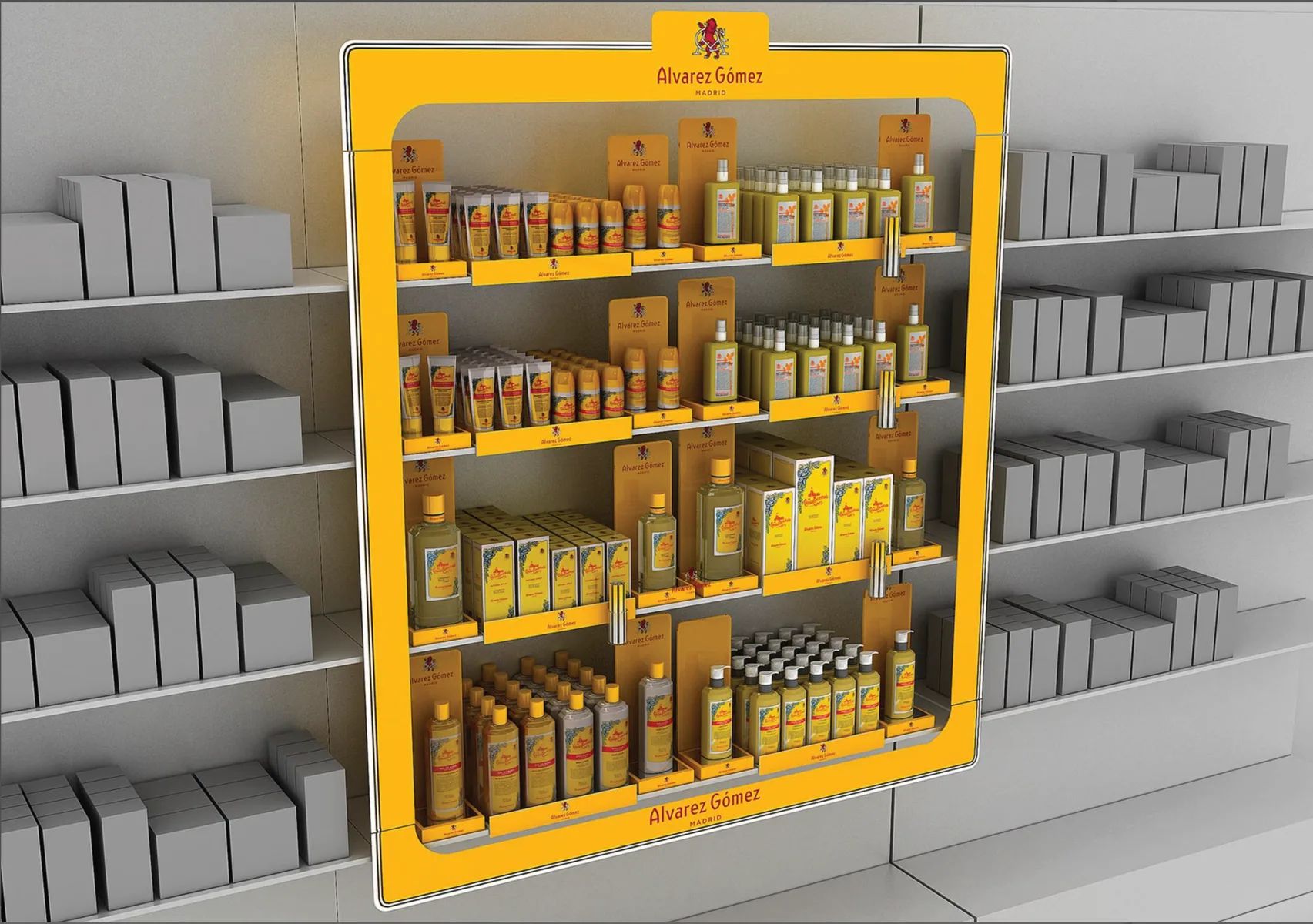
It is fitted onto the store's shelving, where the everyday product sits: shelf-edge strips, stoppers that stick out into the aisle, headers, price holders and frames. For Álvarez Gómez we made a yellow frame around four shelves of the store's unit, with a strip on each shelf and small branded cards above the product, so the brand's space stands out from a distance on a shelf shared with other brands. There are more examples on our shelf-edge displays page.
Pallets, pallet boxes and gondola ends
These are the pieces for large stores. The gondola end, at the end of the aisle, is the most visible spot in the store, and retailers often rent it out by the week. Pallet displays and pallet boxes arrive loaded on a real pallet and go into promotion areas. We explain how one is made in our post on cardboard displays for tool manufacturers, with the pallet we made for Tangit.
Signage, vinyls and illuminated signs
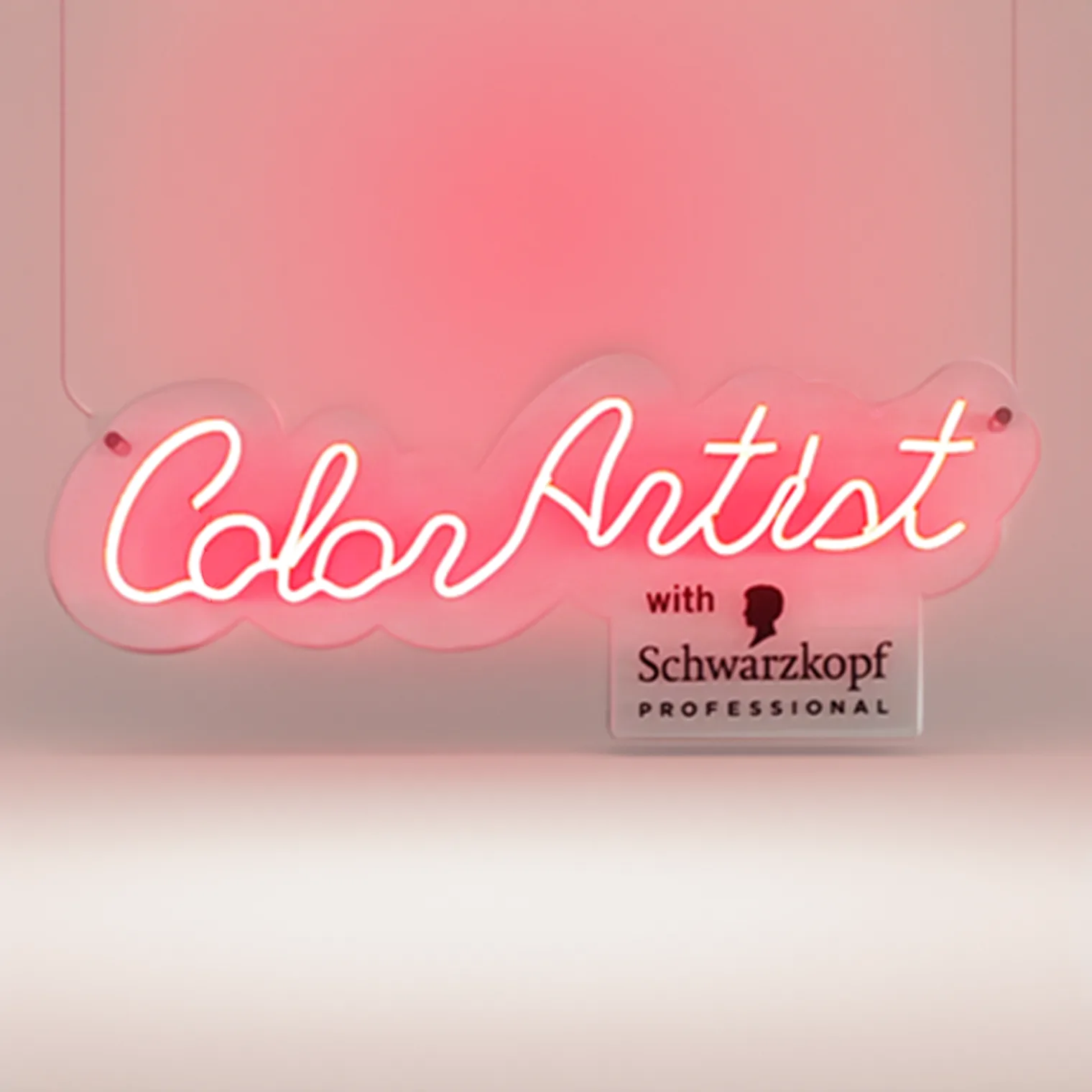
Counter cards, hanging signs, banners and floor or window vinyls. This is the cheapest POSM and the quickest to change. Add light and it becomes a light box or a sign. For Schwarzkopf Professional we made an LED neon with the "Color Artist" lettering from their campaign. Illuminated pieces always run on mains power, because nobody in a store is going to charge a battery. There is more in our post on the illuminated display.
How POSM production works
A custom piece goes through the same stages whatever its type. These are ours, with the usual timings.
- Brief. Which product it holds, in which stores, for how long and within what dimensions the retailer accepts. The clearer this is at the start, the fewer rounds of changes later.
- Quote. About two weeks from the brief until you have the price.
- Design. Our team works out the structure around the weight and size of the product, and you approve it in 3D renders before anything is made.
- Prototype. About two weeks. One is the norm, two at most, and series production does not start until it is approved.
- Series production. 30 to 45 days in cardboard and 45 to 60 days in permanent materials, counted from approval of the final artwork and the prototype. Before shipping, units go through strength and load tests.
- Logistics. Flat-packed, or assembled and loaded with product, and shipped from Barcelona to any country. When the piece is large or goes into many stores at once, our team installs it.
We go into each stage in our guides on working with a POS display manufacturer in Barcelona, integrated POS display management and lead time for custom POS display manufacturing.
If you already have a product and a date it has to be in store, send us your brief and we will start with the quote.
How to choose the right type of POSM
Almost everything comes down to three questions. How long will it be in store, one campaign or several years? Where will it go, on the floor, on the counter or on the shelf, and what sizes does the retailer accept? And in how many stores, since that sets the production run? With those answers you can pick the material and the format, and the rest is design. We go through it step by step in how to correctly choose POS materials.
Frequently asked questions
What does POSM stand for? Point of Sale Materials. It covers everything a brand uses to advertise inside the store, such as displays, counter cards, shelf strips and signs.
What is the full form of POSM? The full form is Point of Sale Materials. Some sources expand it as Point of Sale Marketing, and both refer to the same in-store pieces. POSMs is simply the plural.
What is POSM in marketing? It is the in-store side of trade marketing, the materials a brand uses to launch a product, run a promotion or win space away from the usual shelf.
Is POSM the same as POS and POP? In practice, yes. POS (point of sale) and POP (point of purchase) are used for the same materials, and in Spain and France the term is PLV.
What are examples of POSM materials? Floor and countertop displays, rotating towers, shelf-edge strips, stoppers and headers, counter cards, hanging signs, window vinyls, light boxes, neon signs and pallet displays. Temporary pieces are usually cardboard, and permanent ones are made of metal, wood, MDF or acrylic.
What is the difference between temporary and permanent POSM? Temporary POSM supports a campaign of weeks or months and is usually made of cardboard. Permanent POSM stays in the store for years and is made of metal, wood, MDF or acrylic.
How long does it take to produce custom POSM? About two weeks for the quote and two for the prototype. Series production then takes 30 to 45 days in cardboard and 45 to 60 days in permanent materials, from approval of the final artwork and the prototype.
How many units do you need for custom POSM? There is a minimum run, counted per reference, and it depends on the format and the material. Each version counts separately, even if only the colour or the name changes. Tell us how many stores you have in mind and we will suggest the format that suits that volume.
Planning a POSM campaign?
Tell us which product you want to move, in which stores and for how long, and we will suggest the type of POSM and the material that fit.