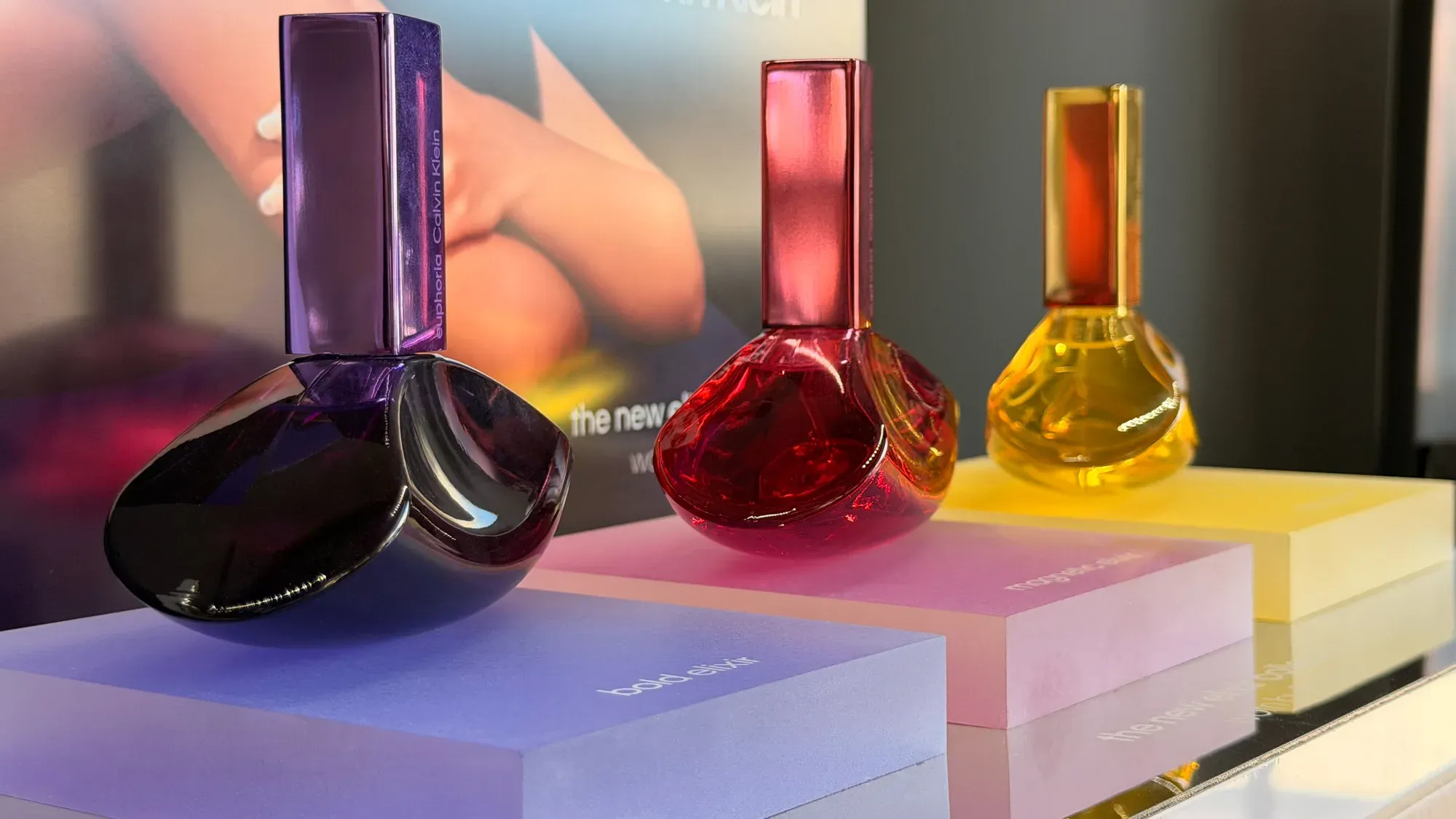
In a pharmacy, the counter is limited territory. It is the highest-traffic zone and, at the same time, the one with the least space available for POS: it competes with the till, the card reader, the pharmacy's own materials and the pharmacist's eye, who decides in seconds whether a piece stays on the counter or goes to the back room. That is why a pharmacy counter display is not designed like a floor display: every centimetre counts and dimensions rule.
This guide collects the typical dimensions we work with at Euromon PLV for counter displays in the pharmacy channel, along with the criteria we use to choose a format by product, material and pharmacy type.
Why dimensions come first in a pharmacy display
On a floor unit, a display can grow in height to gain visibility. On the counter it cannot: the piece has to coexist with daily dispensing operations without getting in the way. A display that is too tall blocks the conversation between pharmacist and patient; one that is too deep invades the payment zone; one with an oversized footprint simply does not fit.
The result is that the counter format is the most demanding in the entire POS catalogue when it comes to dimensions. Designing for pharmacy means starting from the measurements, not from the graphics.
Typical dimensions of a pharmacy counter display
The figures below are indicative ranges based on real projects. Every pharmacy has its own counter layout, but these values cover most cases.
Height
Height is the most sensitive variable. A counter display should not rise above the eye line between pharmacist and patient.
- Common range: 25-45 cm total height.
- Compact format (single product or blister): 15-25 cm.
- Format with vertical communication (graphic header): up to 50-55 cm in specific cases, as long as the header is narrow and does not block the line of sight.
Above 55 cm you move into tall tabletop or semi-floor territory, which many pharmacies will not accept on the counter for operational reasons.
Depth
Depth defines how far the display intrudes into the work zone. It is the second most frequent reason for rejection.
- Common range: 12-20 cm deep.
- Viable minimum: 8-10 cm for single-facing pieces.
- Recommended maximum: 25 cm; beyond that, consider a floor format or shelf header.
Footprint (width × depth)
The footprint is the surface the display occupies on the counter. The rule here is clear: as small as possible for the range it has to show.
- Mini format (impulse, one SKU): 10 × 10 cm to 15 × 15 cm.
- Standard format (3-6 SKUs): 20 × 15 cm to 30 × 20 cm.
- Wide format (full range or campaign): up to 40 × 25 cm, already at the limit of what an average counter allows.
Capacity and number of shelves
- One shelf or tray: ideal for impulse product and fast replenishment.
- Two to three tiered shelves: to show a range with good facing without losing usable height.
- Leaflet holder + product format: combines product sampling with informational material, very common in dermo-pharmacy.
How dimensions change by product
Displaying a food supplement is not the same as a dermo-cosmetic or a device. The product type drives the format.
Dermo-cosmetics and dermo-pharmacy
Facial care, sun or hair products usually call for facing and careful graphics. Two-tier formats with a header work well here, at heights of 35-50 cm. This is the segment where wood or Woodprint makes the most sense, for the quality perception it conveys. On projects for brands such as Furterer we have produced this kind of premium counter piece.
OTC and self-care
Over-the-counter and self-care products prioritise clarity and replenishment. Compact formats, one or two shelves, heights of 25-40 cm and materials that allow large runs at contained cost, usually cardboard. The piece must read at a glance and let the pharmacist restock without dismantling anything.
Food supplements and vitamins
These usually come in medium-sized jars or boxes, which calls for shelves with enough depth (15-20 cm) and some load capacity. Stability matters: a display that tips over with three jars loses the counter battle on day one.
Devices and medical products
Thermometers, tests, small devices: pieces with product of some weight and value, where security and organisation matter more than volume. The logic of a high-durability display scaled down to the counter fits well here.
Cardboard, wood or metal: which material for the counter
Material is not just an aesthetic choice: it drives lead time, cost and the life of the piece.
- Cardboard: the fastest and most economical, ideal for temporary campaigns and promotions. Allows large runs for rollouts to many pharmacies. The default choice for promotional OTC.
- Wood / Woodprint: conveys quality and durability, fits dermo-cosmetics and premium brands. Long life, longer lead time.
- Metal or mixed: reserved for permanent displays with heavy or high-value product, where security and intensive use are the priority.
For a more detailed decision on fitting the format onto small counters, it helps to review our criteria on displays for small spaces.
Common mistakes when sizing a counter display
- Designing for the ideal range, not the real one. It is tempting to show the whole range. The pharmacist will only accept the piece if it is proportionate to the space; better a well-stocked compact format than a large one that ends up removed.
- Forgetting the till operation. If the display gets in the way of payment or dispensing, it will last days. Keep the card-reader zone and the work surface clear.
- Headers that are too tall. A header covering the pharmacist's face is the number-one cause of counter rejection.
- Underestimating stability. Product in heavy jars or boxes demands a weighted base or enough depth. A display that wobbles every time a unit is picked up signals low quality.
How we plan a counter display at Euromon PLV
We always start from three data points: the SKUs to display, their dimensions and weight, and the target pharmacy type (neighbourhood, hospital, large-format). With that we define the maximum admissible footprint and choose material and format. The physical prototype is especially important for the counter, because a difference of a few centimetres decides whether the piece fits or not.
If you need timelines to produce the piece on time, our guide on manufacturing lead time breaks down the times by material and volume.
Want to size your pharmacy counter display?
Tell us which product you want to show and in which type of pharmacy. We will propose format, dimensions and material so the piece earns its place on the counter and works in your favour.
Frequently asked questions (FAQ)
What is the maximum recommended height for a pharmacy counter display? As a general rule, do not exceed 45-50 cm total height, and only reach that limit if the header is narrow and does not block communication between pharmacist and patient.
What footprint does a standard counter display take? A standard format for 3 to 6 SKUs usually ranges between 20 × 15 cm and 30 × 20 cm. Above 40 × 25 cm, consider a floor format or shelf header.
Cardboard or wood for pharmacy? Cardboard is the choice for campaigns and promotional OTC for its agility and cost. Wood or Woodprint fits dermo-cosmetics and premium brands, where quality perception and longer life offset the higher lead time and cost.
Can you produce large runs for many pharmacies? Yes. For rollouts to hundreds or thousands of pharmacies, cardboard allows large volumes at a contained unit cost and distribution to the point of sale.
How long does a cardboard counter display take to manufacture? For a standard cardboard format, the lead time is around 5 weeks from signed brief to delivery, assuming a single prototype iteration.
Written by the Euromon PLV marketing and production team. To size a counter display for your brand, contact our sales department at euromonplv.com.