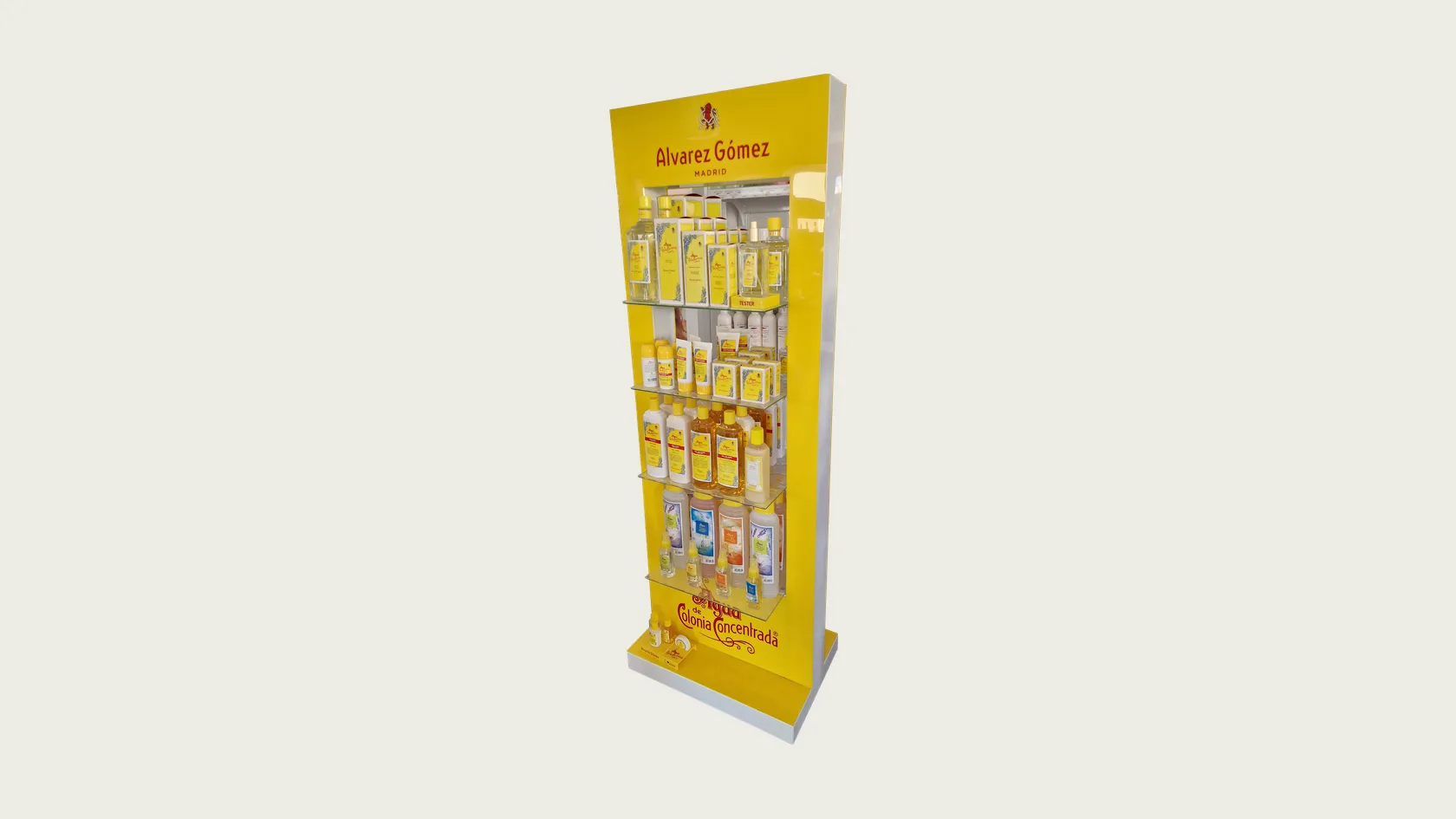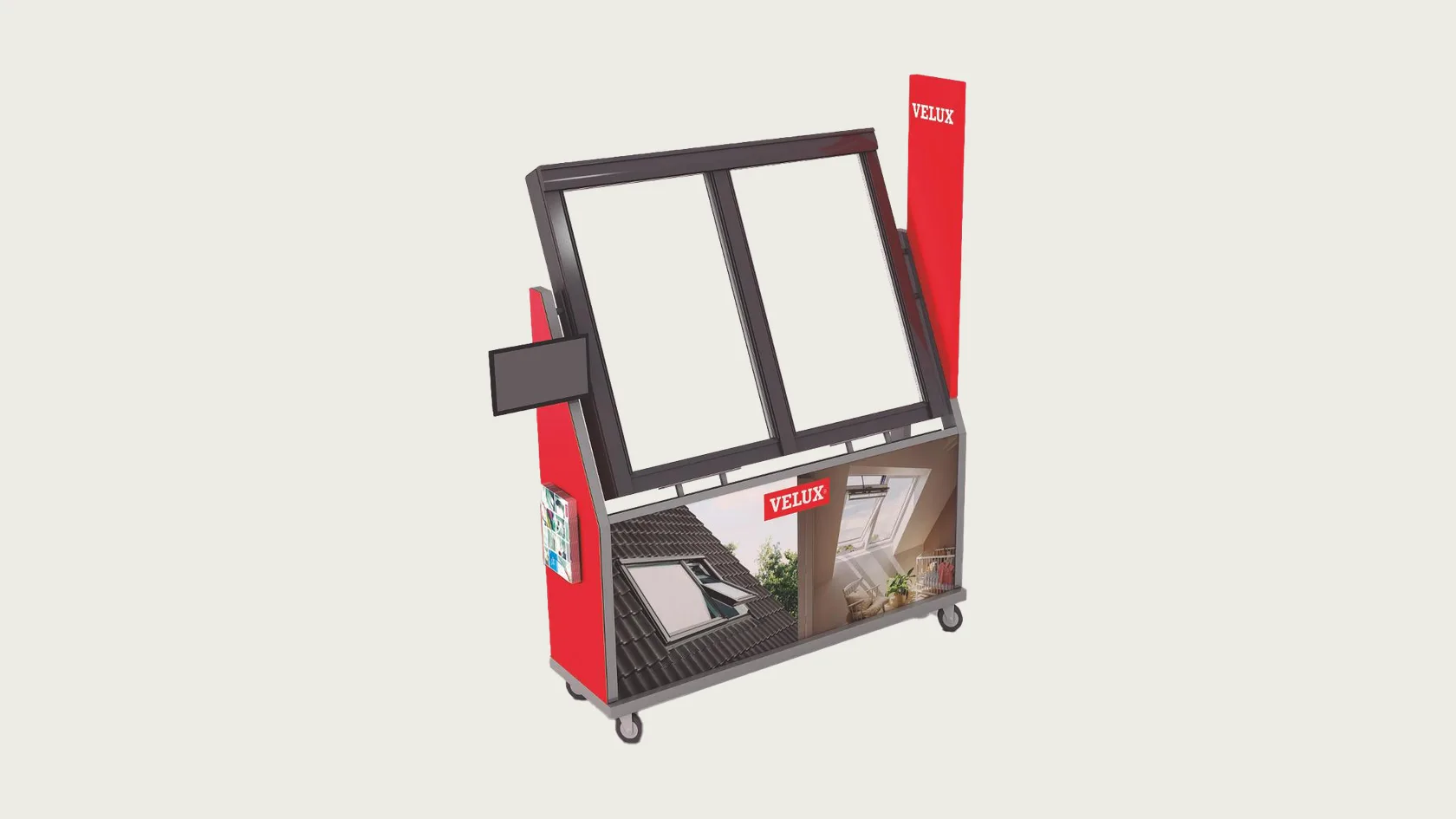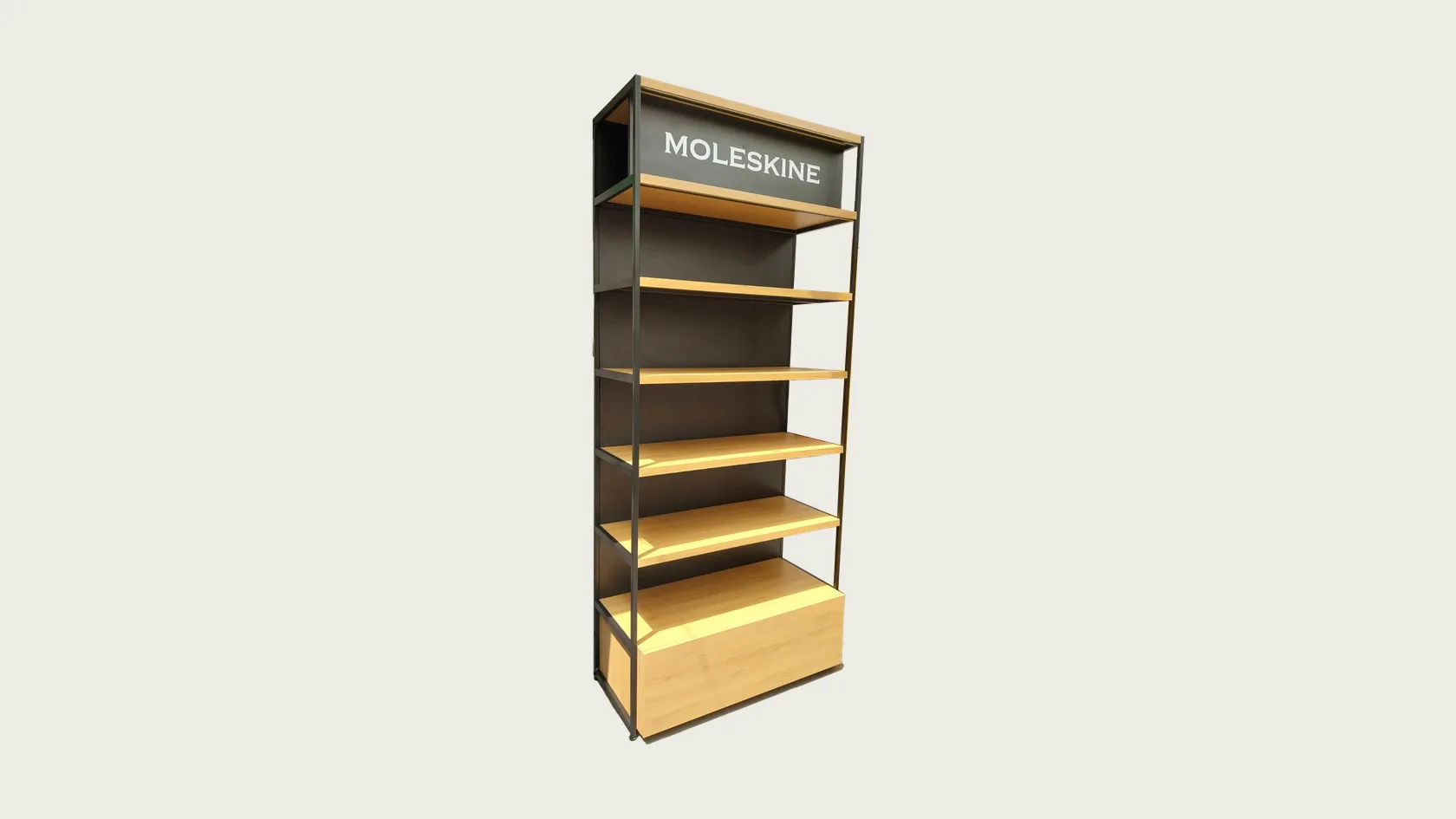
A permanent POS display is the unit a brand puts in a store to stay there. It is the pharmacy fixture that holds a whole supplement range, the perfumery tower, the tyre trolley in a car workshop or the gift card module on the shelf. It is made of metal, wood, MDF or acrylic, it is paid for once and it has to work through many campaigns.
That is why it gets ordered differently from a cardboard display for a four-week promotion. Before anyone draws a line, you need to know what will happen to the unit over the years: who restocks it, which SKUs will come and go, how each campaign's graphics get changed and where it will take the knocks.
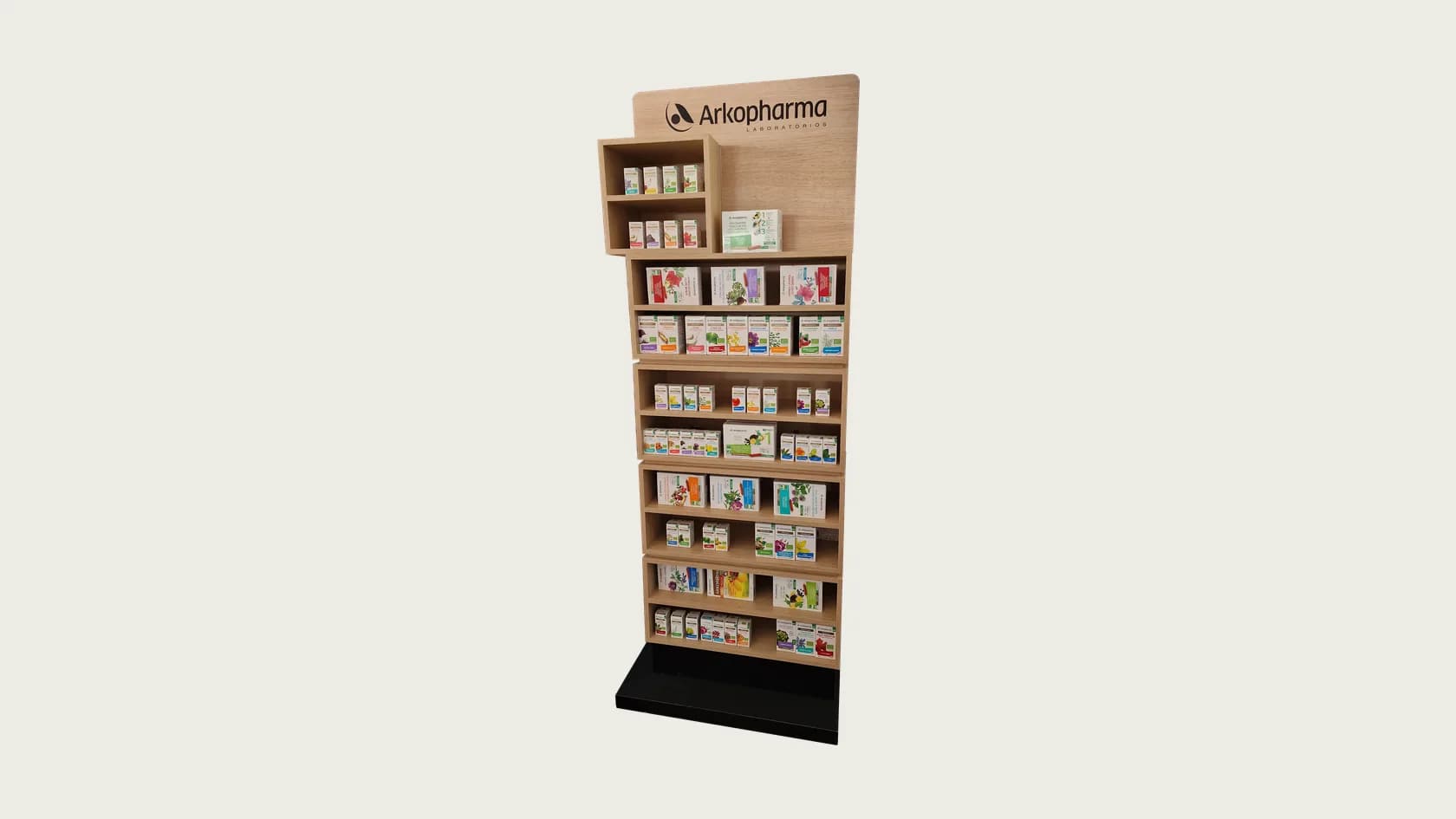
At Euromon PLV we design and manufacture displays in every material, and most of what we make is permanent. The Arkopharma unit on the cover, with oak-finish modules stacked on a black plinth, is one of them. Here we go through what we settle with each brand before building one, using pieces we have made for Hankook, Wonderbox, Parfums Saphir, Goodyear and Velux.
When permanent POS displays pay off
They pay off when the brand has a place in the store that does not expire. That usually comes down to four situations:
- A stable space. The pharmacy, the perfumery or the workshop gives you a fixed spot, rather than a gondola end rented for a few weeks.
- A range that gets restocked. The unit holds products that sell all year round and are refilled every few days.
- Heavy, expensive or hard-to-organise products. Tyres, glass bottles or dozens of supplement SKUs need a structure that carries the load and keeps things in order.
- Several campaigns a year. If the same structure can be dressed for each campaign with new graphics, the cost of the unit is spread across all of them.
If the space is rented for a promotion, or the piece goes into hundreds of stores for a few weeks, cardboard usually works better. We compare the two on our cardboard displays page.
The structure stays and the graphics change
On a permanent unit, the graphics age first: the campaign claim, the ambassador's face, the product that used to be new. A well-built structure lasts much longer, so we keep the two apart from the design stage.
The Hankook tyre trolley shows how. It is a black steel frame on castors with two decks of tyres, and the branding sits on separate parts fixed to the frame: the header, the strip on each deck and the side panel. Both versions in the photo share the same frame design. What changes is the graphics, which on the right add the Real Madrid Global Partner badge.
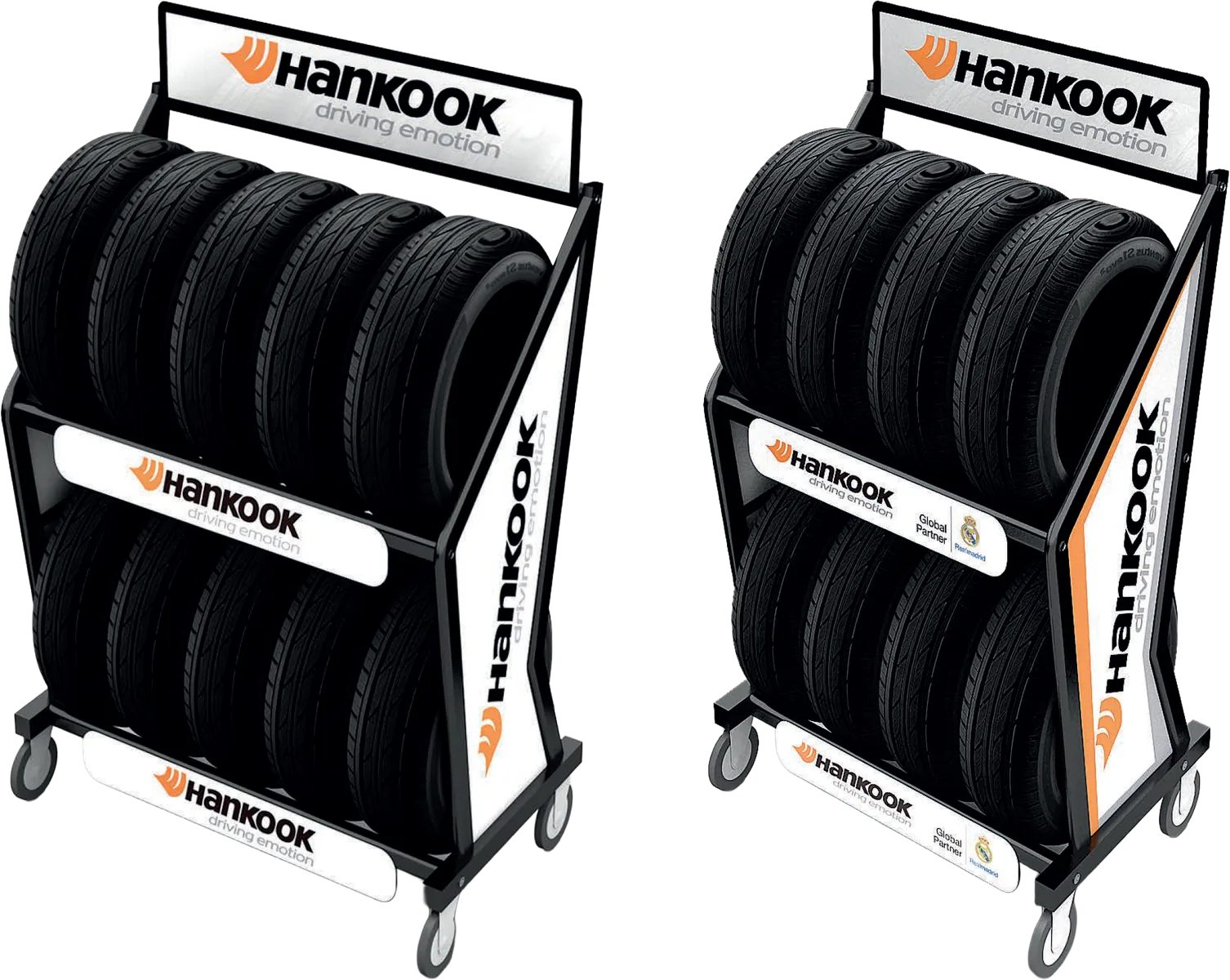
On metal, the most practical way to change graphics is magnetic vinyl. When a new campaign comes round you only pay for the vinyls, the structure stays as it is and the same unit can serve several brands in the group. It is worth screen-printing the logo underneath the magnet, because now and then another brand puts its own vinyl on top and takes the unit over. For Parfums Saphir we have also made a display with a metal structure and printed canvas panels that are swapped every season. There is more on this on our metal displays page.
Modules so the unit grows with the range
A product range changes faster than a fixture. New SKUs come in, others go, a box changes size. If the display is a single piece, every change means building a new one. With modules, you only replace the one that no longer fits.
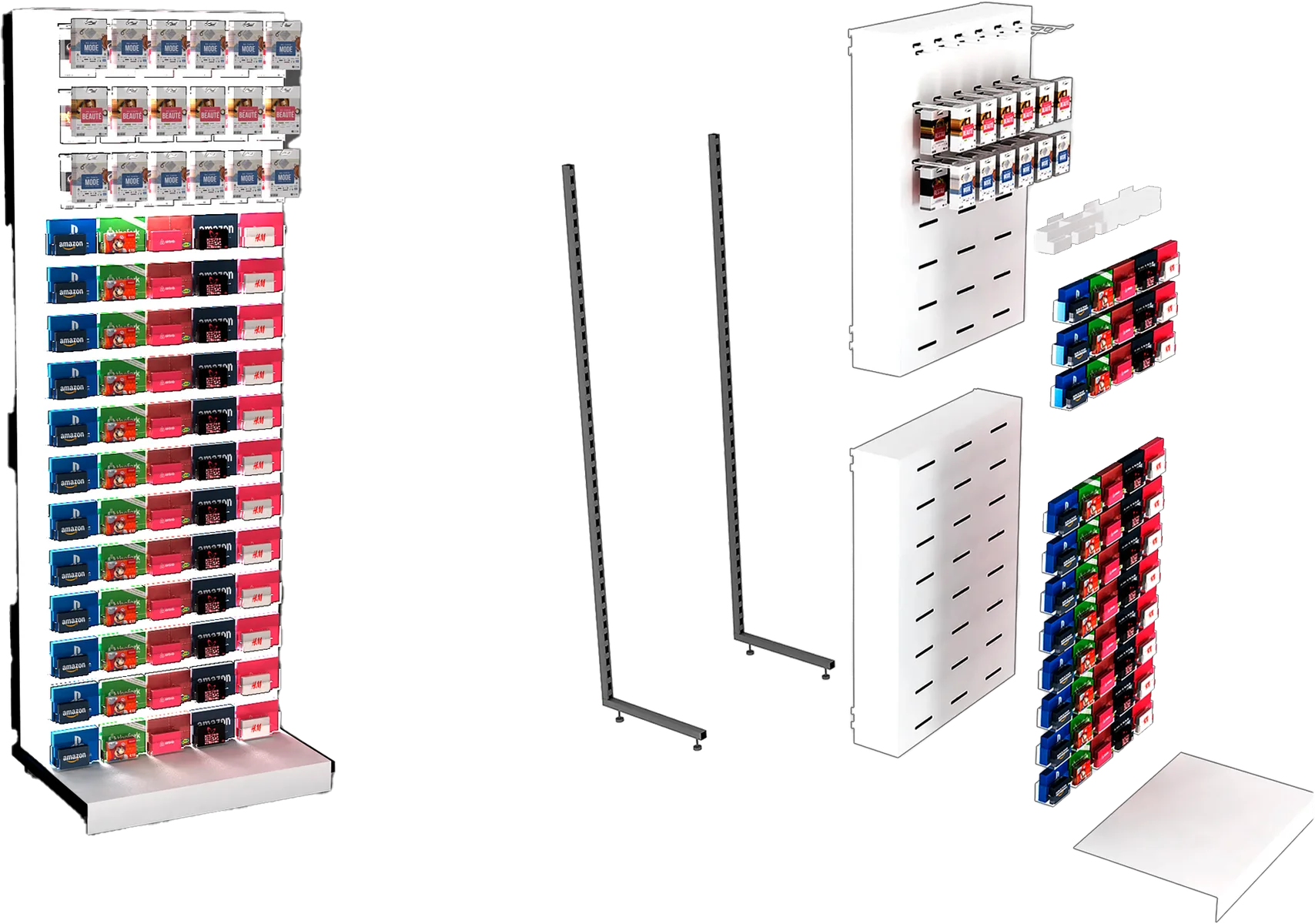
The shelf module we made for Wonderbox is built from two slotted metal uprights with feet, two slotted white panels, clear card holders and a plinth tray. The card holders and hooks go into the slots on the panels, so the layout of gift cards and blister packs can be redone by moving parts around, without making a new unit. In another version of the same module, with a screen at the top, the Christmas campaign arrives as a tray of gift boxes on the plinth and the rest of the unit stays the same.
The Arkopharma unit on the cover follows the same logic in a different material. It is a stack of bodies, each with its own shelves, plus a niche at the top that sticks out from the rest to feature a handful of products.
Built for everyday life in the store
A campaign display is assembled, filled and removed. A permanent one is refilled every week, pushed aside when the floor is mopped, bumped by restocking trolleys and touched by every shopper who tries a fragrance. All of that gets solved in the design, and hardly any of it shows up in a render.
The two Parfums Saphir units in the photo are both for perfumery and solve different problems. Les Jours has six shelves with front stops and a strip on each level, and it stands on castors, which you appreciate on a tall, loaded unit every time you need to clean around it or move it. Pure Fleur keeps the top for a clear tray with a tester of each cologne, and has three shelves of boxes below.
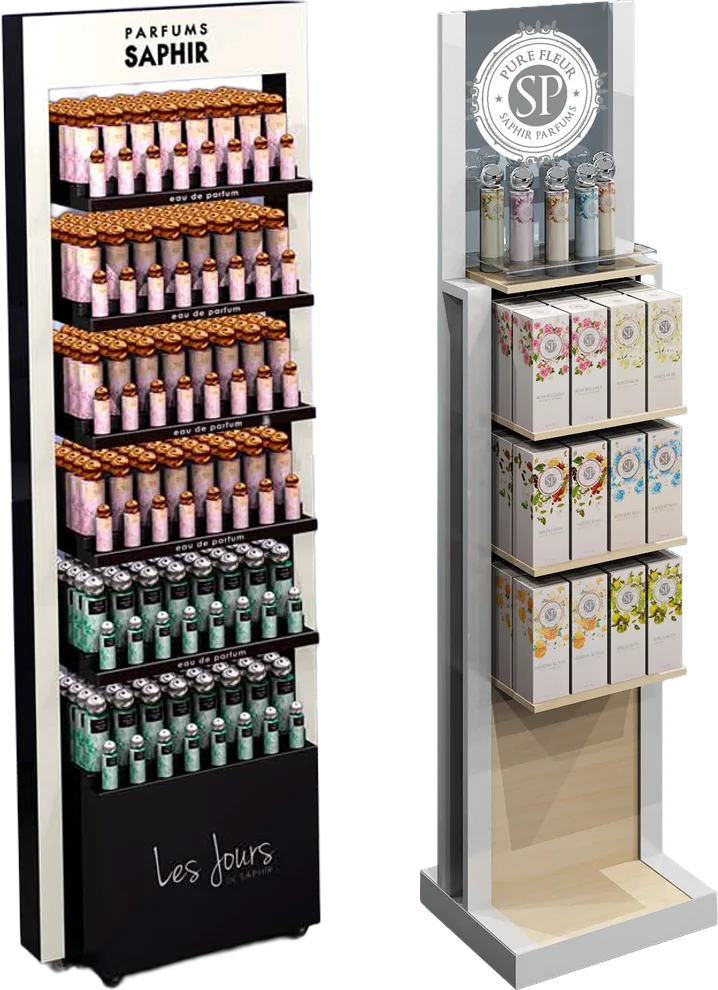
We also go through with the brand what happens after installation. Stops and dividers keep the unit tidy after many rounds of restocking. Testers in perfumery and cosmetics need a fixed, secure spot, which we cover separately in our guide to POP display design and manufacturing for perfumery. The plinth has to stand up to mops and trolleys, like the black one on the Arkopharma unit.
If the unit has lighting, it always runs on mains power, because nobody in a store is going to keep a battery charged. We look at this in our post on the illuminated display.
A permanent display can also explain the product
Some permanent units barely sell anything themselves. Their job is to explain the product at the point of sale, where shoppers ask questions and the sales staff need something to show them.
The Goodyear unit puts a cut-away section of the Eagle F1 Asymmetric 3 tyre on the counter, with every inner layer visible, in front of a panel with its braking and grip figures. The Velux unit holds a section of a roof window with its frame profiles and double glazing, so customers can touch it, and carries a leaflet holder on the side.
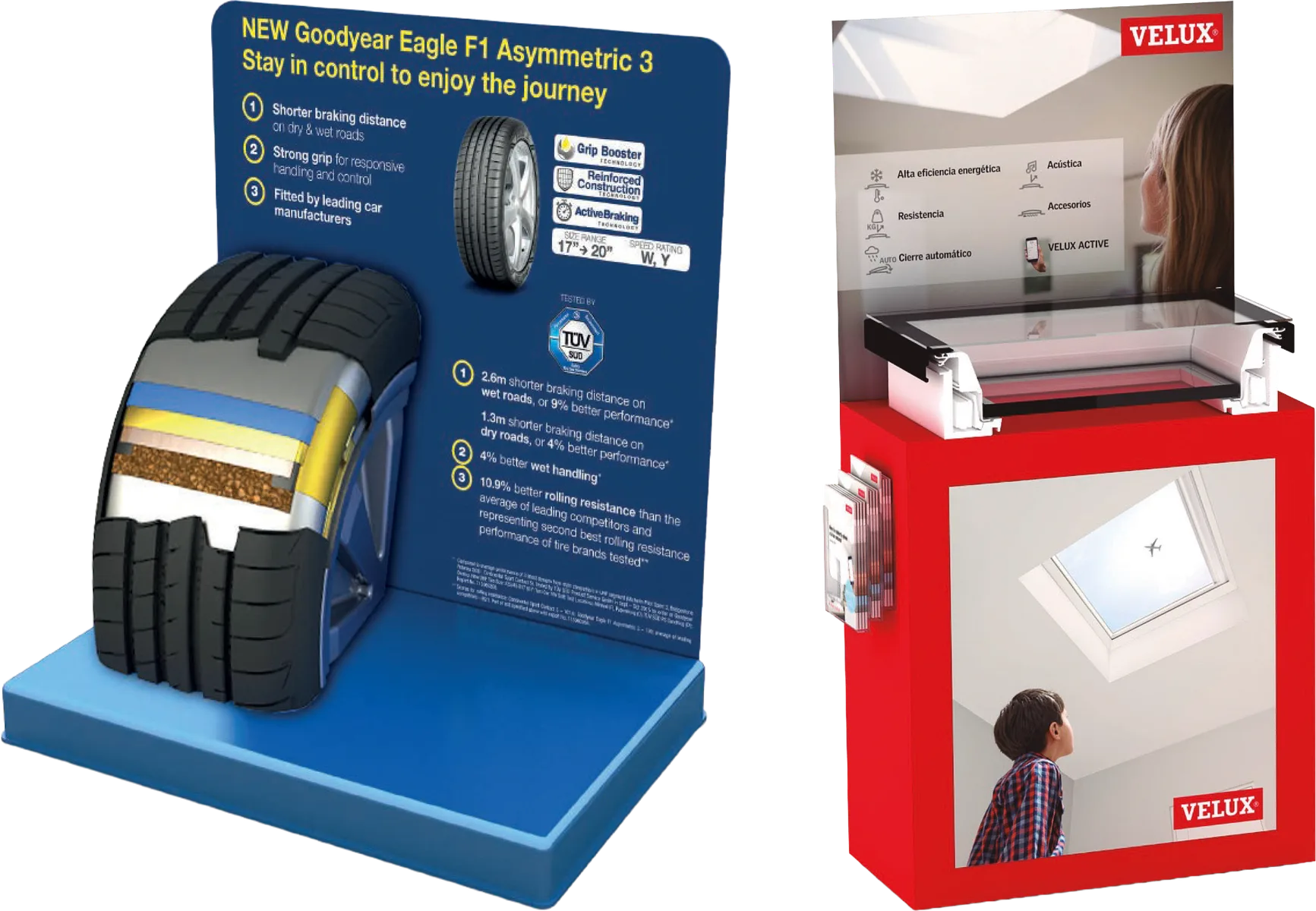
These pieces have to stay presentable for the whole life of the range while the sample is handled every day, and that calls for a rigid material.
Materials for a permanent POS display
| Material | When we choose it for a permanent unit |
|---|---|
| Metal | Heavy loads, intensive use, castors and graphics changed with magnetic vinyl |
| Wood and MDF | Pharmacy, perfumery or food. MDF ships flat, goes together without screws and carries far more weight than cardboard |
| Acrylic | Cosmetics, perfumery and pharmacy counters, podiums and testers, with a more premium finish |
| Mixed | When each part calls for a different material, such as a metal frame with wooden shelves |
Before shipping, every unit goes through strength and load tests, and we check that it is easy to use.
Lead times and minimum runs for a permanent POS display
The minimum is counted per SKU: 250 units for a countertop display and 100 units for a floor display.
Sending you a quote takes about two weeks from receiving the brief, and the prototype another two weeks from design approval. One prototype is the norm, two at most. Production of a permanent display takes 45 to 60 days from approval of the final artwork and sign-off of the prototype. We break down each stage in our guide to lead time for custom POS display manufacturing.
We ship from Barcelona to any country and, when the unit is large or goes into many stores at once, our team installs it at the point of sale.
What we need to quote it
- Units per SKU, or the volume range you are working with.
- Product samples. If you cannot send them, exact dimensions, although with a sample we design the housing around the real product.
- Maximum pallet height.
- How long it will stay in store and how often the campaign changes, so we can decide what is fixed and what goes on interchangeable parts.
- Where it goes and how much space there is, measured in the store.
- Who restocks it and who assembles it: store staff, your field team or ours.
Frequently asked questions
Can we add SKUs later on? Yes, if the unit is designed in modules. You add or swap the module, tray or card holders you need without rebuilding the structure, as on the Wonderbox shelf module.
Can the graphics be changed without changing the display? Yes, if it is designed that way from the start. On metal, magnetic vinyl is the most practical option. In other materials, panels, strips or headers that can be swapped without touching the structure.
What is the minimum order for a permanent display? 250 units per SKU for countertop displays and 100 for floor displays.
How long does production take? Between 45 and 60 days from approval of the final artwork and the prototype. Before that come about two weeks for the quote and another two for the prototype.
Do you install the displays in store? Yes. We ship from Barcelona to any country and can install at the point of sale, which helps when the unit is large or goes into many stores at the same time.
Planning a permanent display for your brand?
Tell us what product it will hold, how many stores it goes to and how long it has to last, and we will tell you what should stay fixed and what should be easy to change.