A POS wall display is anything a brand puts against a store wall or hangs from it. A wall unit filling a whole bay, a locked cabinet, a panel hooked onto the shelving, a neon sign. It takes no space from the aisle, sits at eye level and is nearly always permanent, because nobody drills into a wall for a four-week promotion.
What sets it apart from a floor display is that it depends on the wall. Before drawing anything you need to know whether the wall can take the weight, who is going to fix the piece, whether there is a socket nearby and whether the store already has its own system of slotted uprights or pegboard. The format follows from those answers.
At Euromon PLV we design and manufacture displays in every material. Here we go through the wall formats using pieces we have made for Arcos, Henkel (with its Pattex and Loctite brands), Rude Cosmetics and Revlon Professional.
The main types of POS wall displays
The same name covers five very different kinds of piece.
- Wall units. Tall, shallow fixtures that stand on the floor and sit flush against the wall. They carry the whole range.
- Wall cabinets. Closed with glass and a lock, fixed to the wall.
- Panels and modules that hook onto the system the store already has, its slotted uprights or the pegboard on the shelving.
- Shelving bays with a single face, branded on the header, the back panel and the shelves.
- Illuminated signage. Neon and signs that carry no product and show where the brand is.
We always mean a brand's piece inside a store that the brand does not own. Fitting out a whole store of your own, with its shelving, counters and fascia signs, is interior design work, and we do not take it on.
A wall unit for the whole range
A wall unit makes sense when the brand gets a section of wall to itself and wants to show the whole range together. The one we made for Arcos cutlery has three bodies. Both sides have pegboard with hooks; the left one ends in glass shelves at the bottom, and the right one adds pigeonholes at the top and divided trays below. The wood-finish centre body has a cabinet with glass doors at the top and another hook panel underneath. LED strips along the edges light all three from inside.
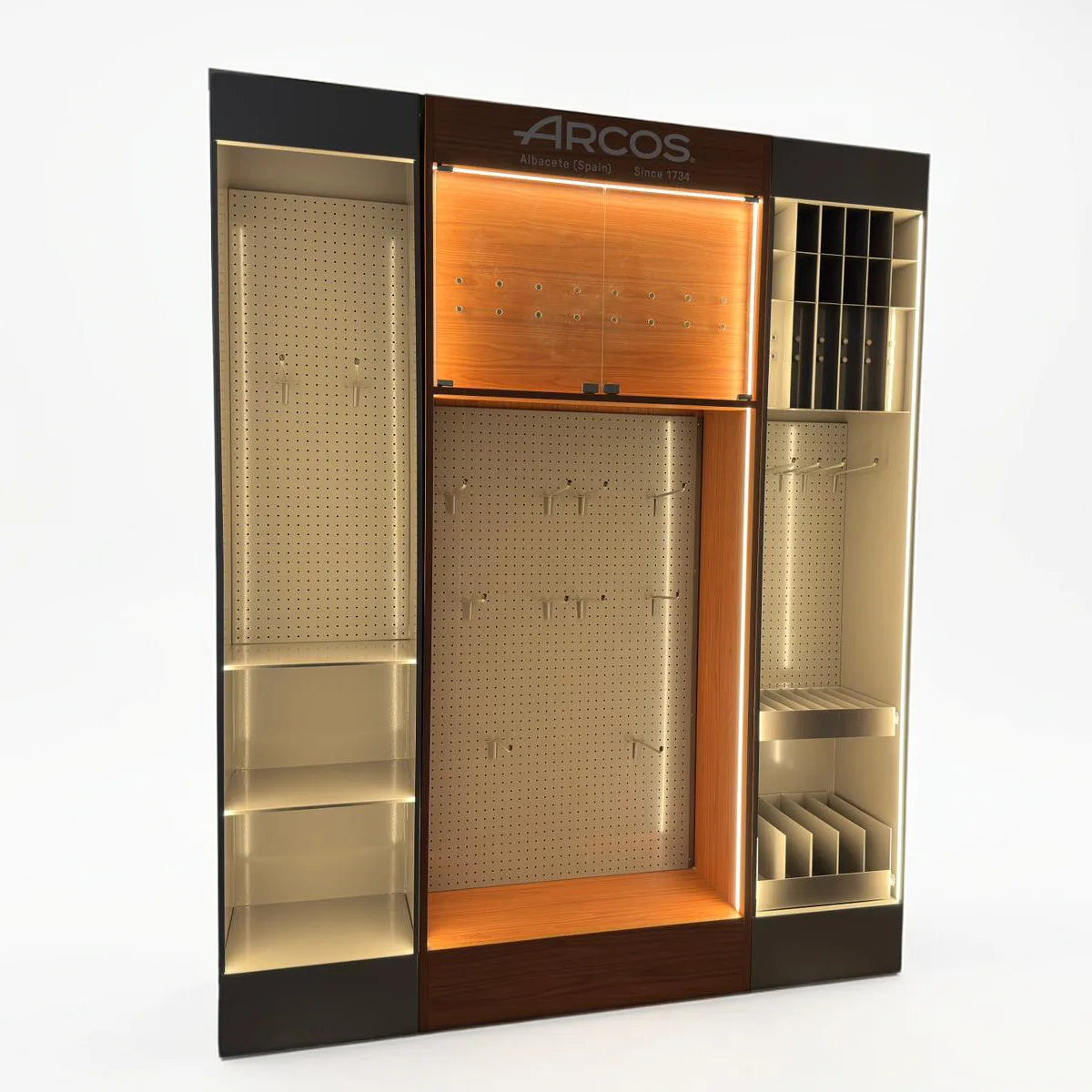
In a unit like this, each zone is planned for one kind of product. Behind the glass, at eye level, go the most expensive items and anything sharp, which shoppers look at but do not pick up without a sales assistant. Blister packs go on hooks, where people help themselves. Long items stand upright and in order in the pigeonholes and trays.
A large wall unit rarely travels assembled. It is designed to ship flat and be put together in store, because the freight difference is large: with a two-metre floor fixture for Arcos we went from about two units per pallet assembled to about eight flat-packed.
A cabinet for what cannot be left out
If the store has no room for a wall unit, or the product has to be kept under lock and key, the answer is a wall cabinet. The Arcos one is tall, narrow and shallow, with a header reading "Made in Spain, Since 1734", a glass door with a lock and two rows of studs to hang the knives one by one.
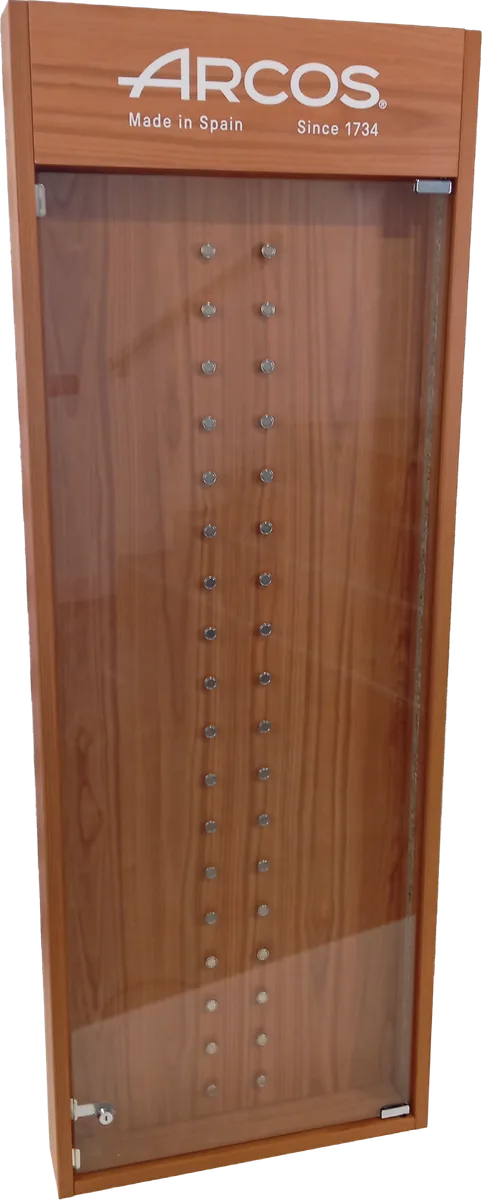
The first thing we ask about a cabinet is who holds the key. If the product only comes out with a sales assistant, the cabinet has to be near the counter or the till, and that already decides which wall it goes on. Then, how each item is held inside: studs, hooks or holders made to fit the product, so nothing falls when the door opens.
And the weight. A hanging cabinet puts everything on the wall, glass included, so the wall type and the fixings are worked out before production.
Panels that hang from the store's own system
Many stores, especially in DIY, hardware and grocery, already have their walls set up: slotted metal uprights, or pegboard where hooks and shelves clip in. A brand can use that and put up its wall display with no structure of its own and no drilling.
The Pattex panel for its Power Colles range, with French graphics, hangs from the uprights. It has a wood-look background, the range's reptile eye on the header and four rows of blister packs on hooks. The Loctite Super Glue-3 module is smaller still, a rod with hooks and a brand card that clips onto the pegboard of the shelving.
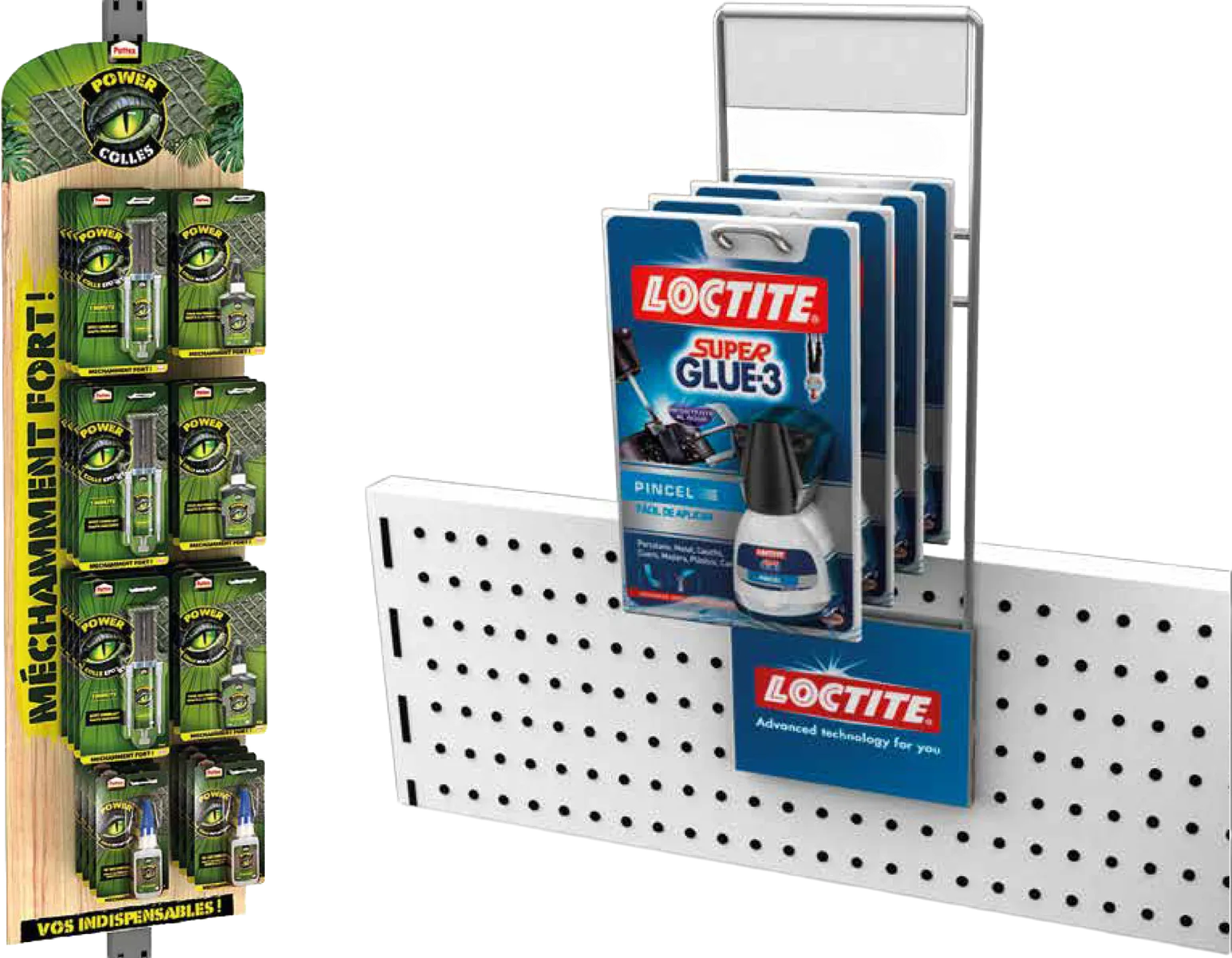
It is the lightest kind of wall display and the quickest to put up, because store staff hang it themselves. The catch is that you need to know each chain's system beforehand. Slot spacing on the uprights and hole size and pitch on the pegboard vary from one chain to the next, and a hook that does not fit leaves the piece in the stockroom.
For a campaign, the panel can be solid board with wire hooks, like the Rubson and Tangit ones we show in the post on cardboard displays for tool manufacturers.
A shelving bay branded top to bottom
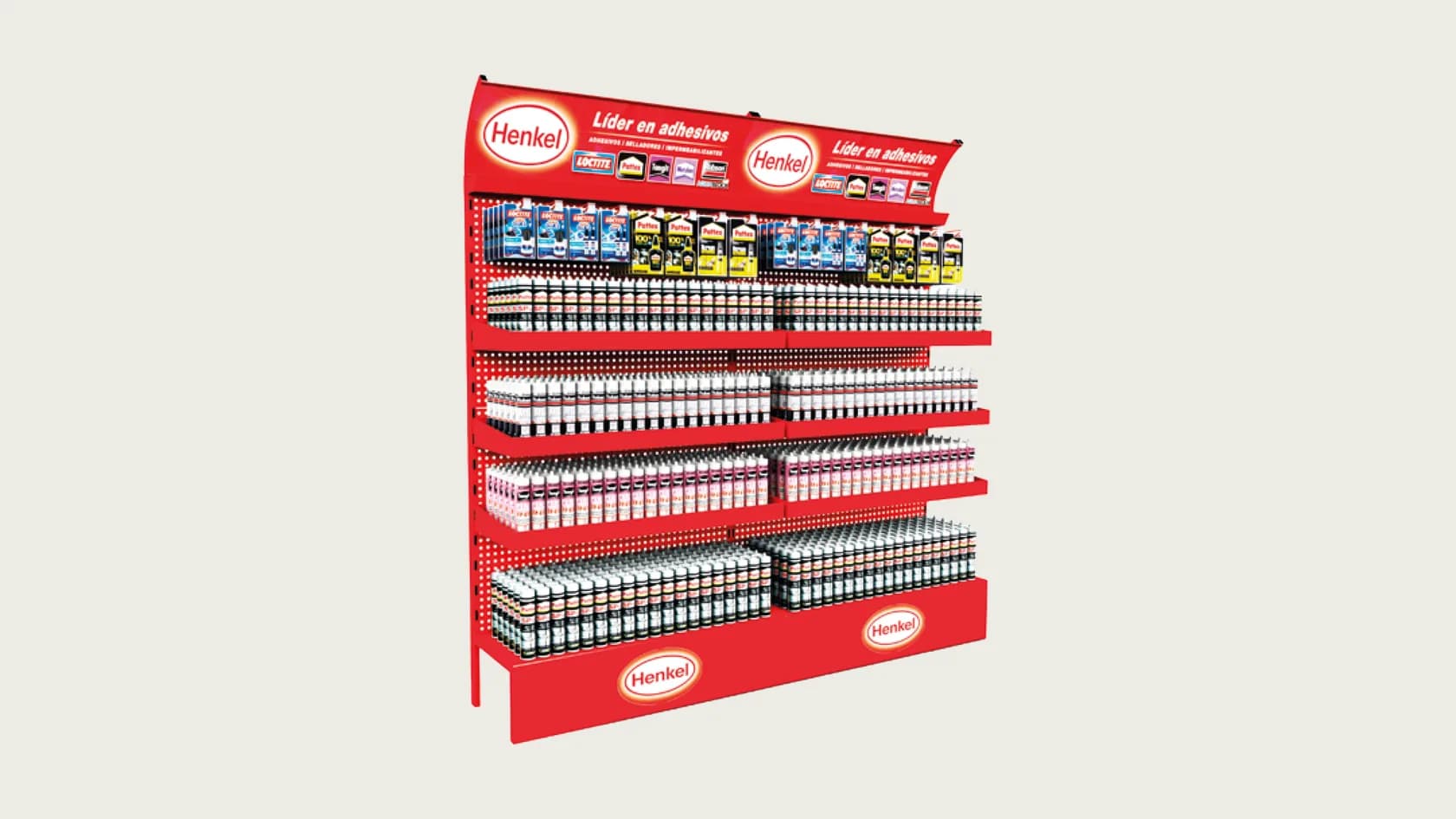
If the brand secures a whole bay of shelving, the display fills its full height. The Henkel bay on the cover, which groups its adhesives and sealants under the line "Líder en adhesivos" (leader in adhesives), is a single-sided unit in the brand's red. On top it has a curved header with the Loctite, Pattex, Tangit, Metylan and Rubson logos. Below come a row of hooks with blister packs and four levels of cartridges, all on pegboard from top to bottom.
A bay like this lasts for years because the whole back is perforated. When a new product comes in or the range changes, the hooks and shelves move up or down without touching the structure. With a single face, it goes against the wall or back to back with another bay. We have worked with Henkel for twenty years, and we explain how to separate the structure that stays from what changes in what to decide before ordering permanent POS displays.
Light on the wall
The Rude Cosmetics make-up wall unit stands on the floor against the wall, in pink, with an LED profile running all round its outline and the logo in neon on the header. Four shelves with clear dividers hold lipsticks, eyeshadows and pencils with prices on the front edge, and below, the palettes face outwards on a sloping panel.
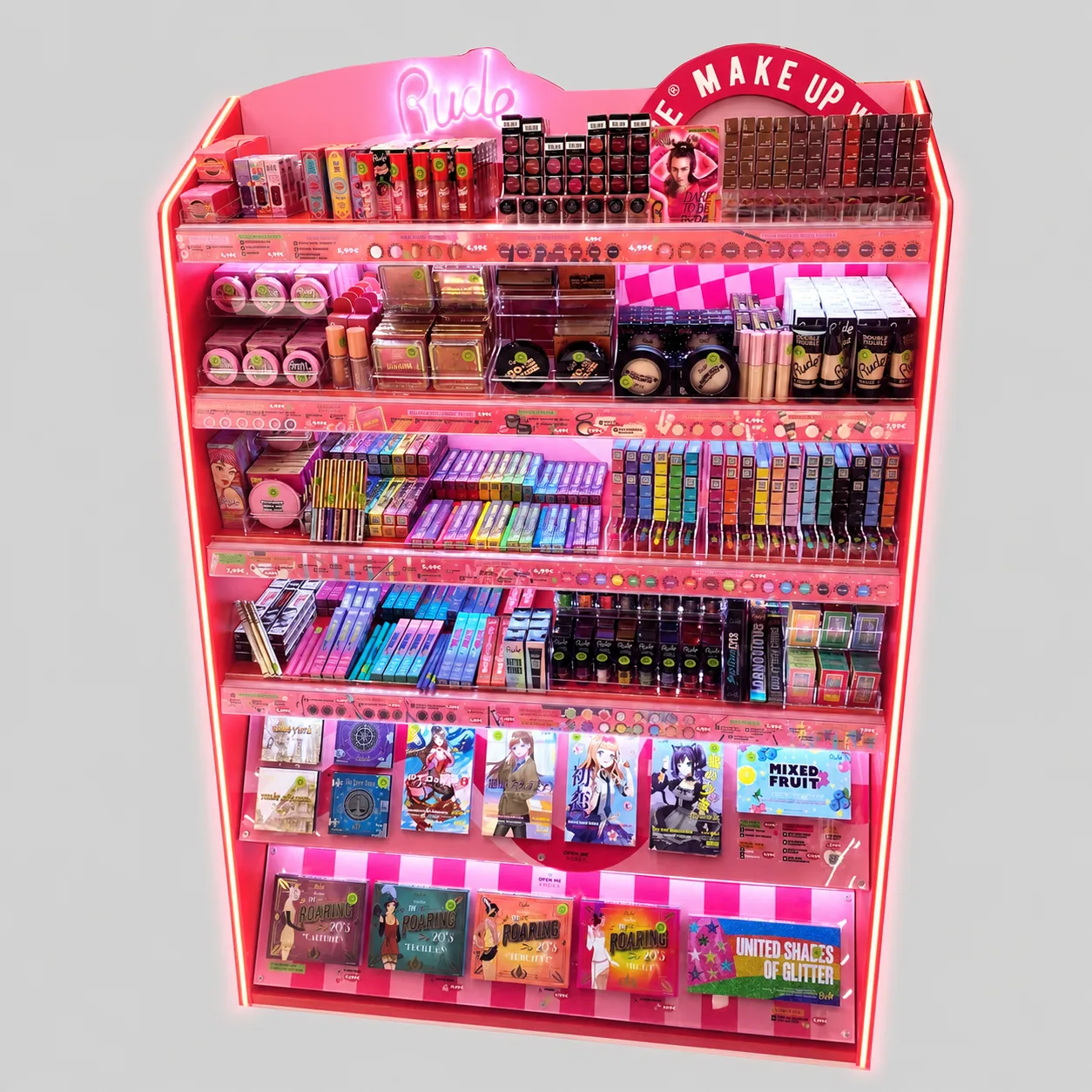
Even though it stands on the floor, a tall wall unit should be fixed to the wall so it cannot tip if someone pulls on a shelf. And light needs a socket nearby. Our illuminated displays always run on mains power, never batteries, because nobody in a store is going to keep changing them.
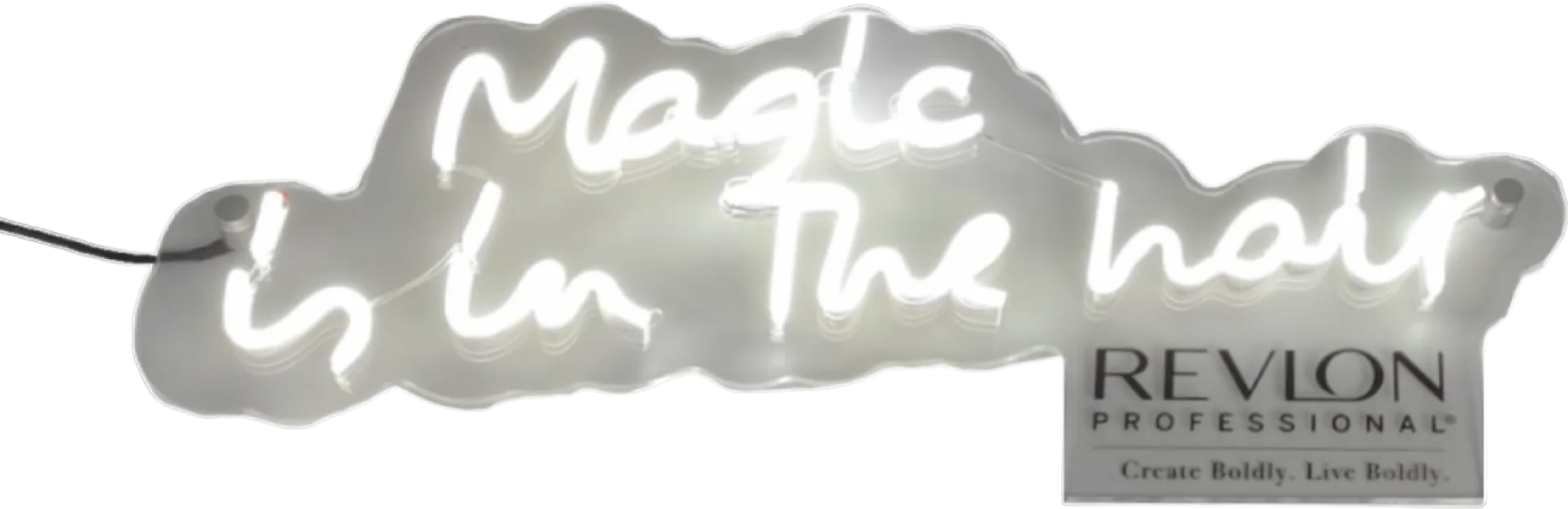
A wall can also carry just the brand. The Revlon Professional neon reading "Magic is in the hair" is an LED tube that imitates neon, mounted on a clear plate cut to follow the text, with the brand plate in one corner. It carries no product and its job is to mark where the brand sits in the store. It is the same kind of piece as the pink "Color Artist" sign we made for Schwarzkopf Professional.
There is more on displays with lighting in our post on illuminated displays.
What to know about the wall before design starts
To quote any display we always ask for quantities, product samples and the maximum pallet height. A wall piece also needs details about the wall itself:
- What the wall is made of. Masonry, plasterboard or one of the store's own panels. For a hanging cabinet it decides the fixings; for a floor-standing unit, how it is anchored so it cannot tip.
- The size of the space. Width, height up to the ceiling or to whatever is above, and any skirting, columns or radiators.
- Whether the store has uprights or pegboard, which model, and the spacing between slots or holes.
- Where the socket is, if the piece has lighting.
- Who installs it. Store staff can hang it or we can handle installation, which pays off for large pieces or when many stores go live at once.
- How often the graphics change. If they change every campaign, a metal structure with magnetic vinyl means only the vinyl is replaced.
- How many stores, and whether they all have the same wall or need versions.
Lead times and minimums for wall displays
Most wall displays are permanent. Production takes 45 to 60 days from approval of the final artwork and the prototype, which takes about two weeks. The quote comes first and takes about two weeks from the brief. A large wall unit is closer to a shop-in-shop than to a display, and can take a little longer.
We work with a minimum production run per reference. For permanent floor displays it is 100 units. For wall units, shop-in-shops and signage it depends on the piece, and we work it out with you based on the number of stores.
Frequently asked questions
Can a wall display be made of cardboard? For a campaign, yes, especially panels that hang from the uprights. Wall units and cabinets are permanent and are made in wood, MDF, metal or a combination.
Do you install wall displays in store? Yes, we install at the point of sale when the piece needs it. If it hangs from the store's own system, we design it so store staff can put it up.
Can the graphics change without changing the fixture? Yes, if it is planned from the design stage. With a metal structure and magnetic vinyl, only the vinyl is replaced each campaign.
Can you make a wall-mounted leaflet holder? Yes. It can be built into the wall unit, next to the product it explains, or made as a separate piece.
Planning a wall display for your brand?
Every wall is different and every chain has its own system, so we do not work from a catalogue. Tell us what product goes on it, which stores, and what wall you have been given, and we will propose the format, prototype it with your product and ship it to your stores.