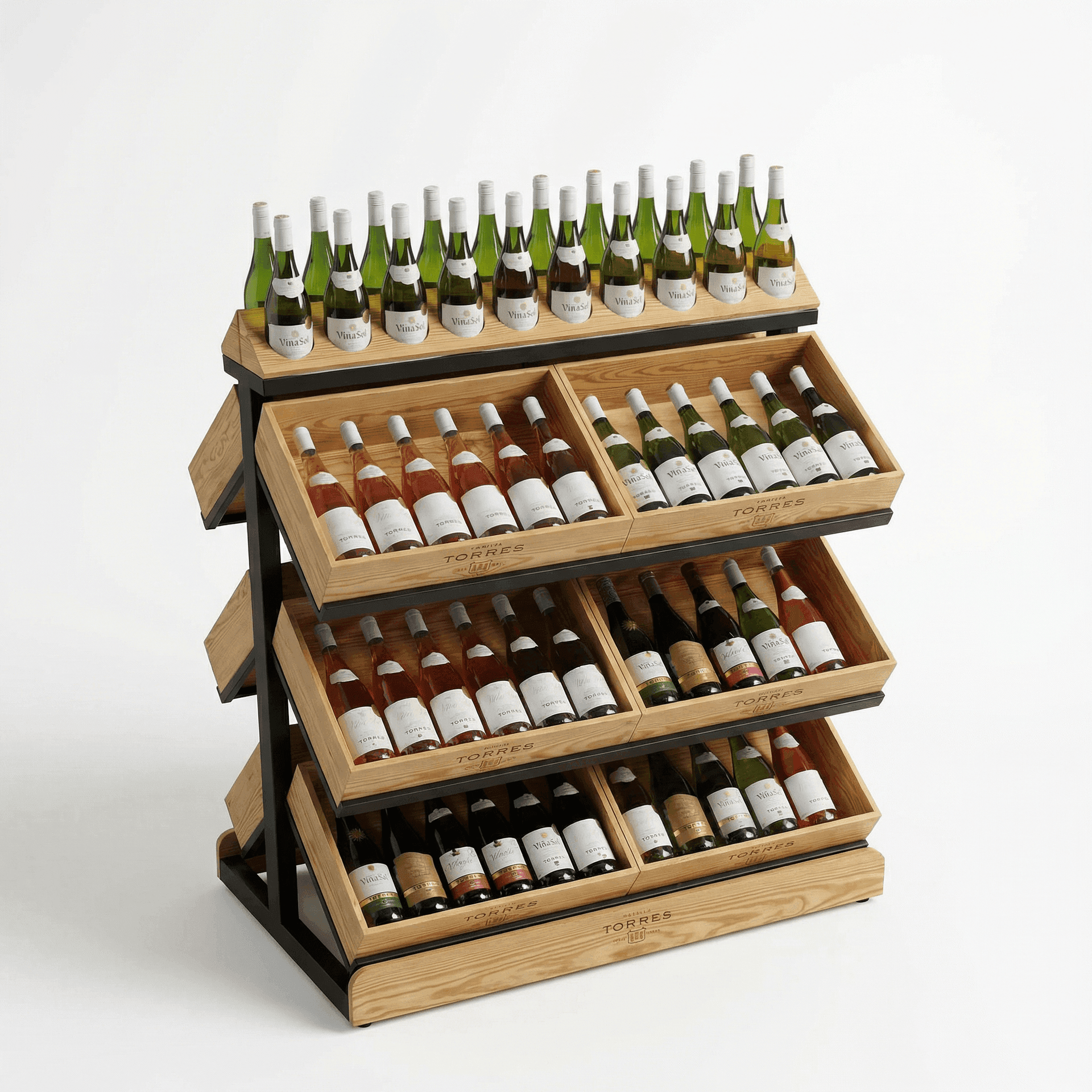
At the point of sale, the brand looking to place a display rarely gets to decide how much space it will occupy.
The decision usually falls to the establishment itself, due to factors such as its product assortment, customer traffic, and aisle layout. As a result, in many cases, the space available for displays is very limited.
However, there are design solutions that make it possible to make the most of those corners, edges, or even tiny counters.
Below, we will explore various options for a POS display for small spaces, distinguishing between those placed on the floor and those positioned on a countertop.
How to choose the best POS display for small spaces
The key to making the right choice lies in first analyzing the available area and then optimizing the height to compensate for limited width and depth.
A vertical and narrow design can be the factor that makes the difference. Additionally, the choice of material (cardboard, wood, or other) will depend on the product’s weight, the desired durability, and the available budget.
If you need to use floor displays...
For stores with limited floor space or high foot traffic, it is advisable to choose displays that make use of vertical space. Let’s look at some options:
Narrow wooden tower display
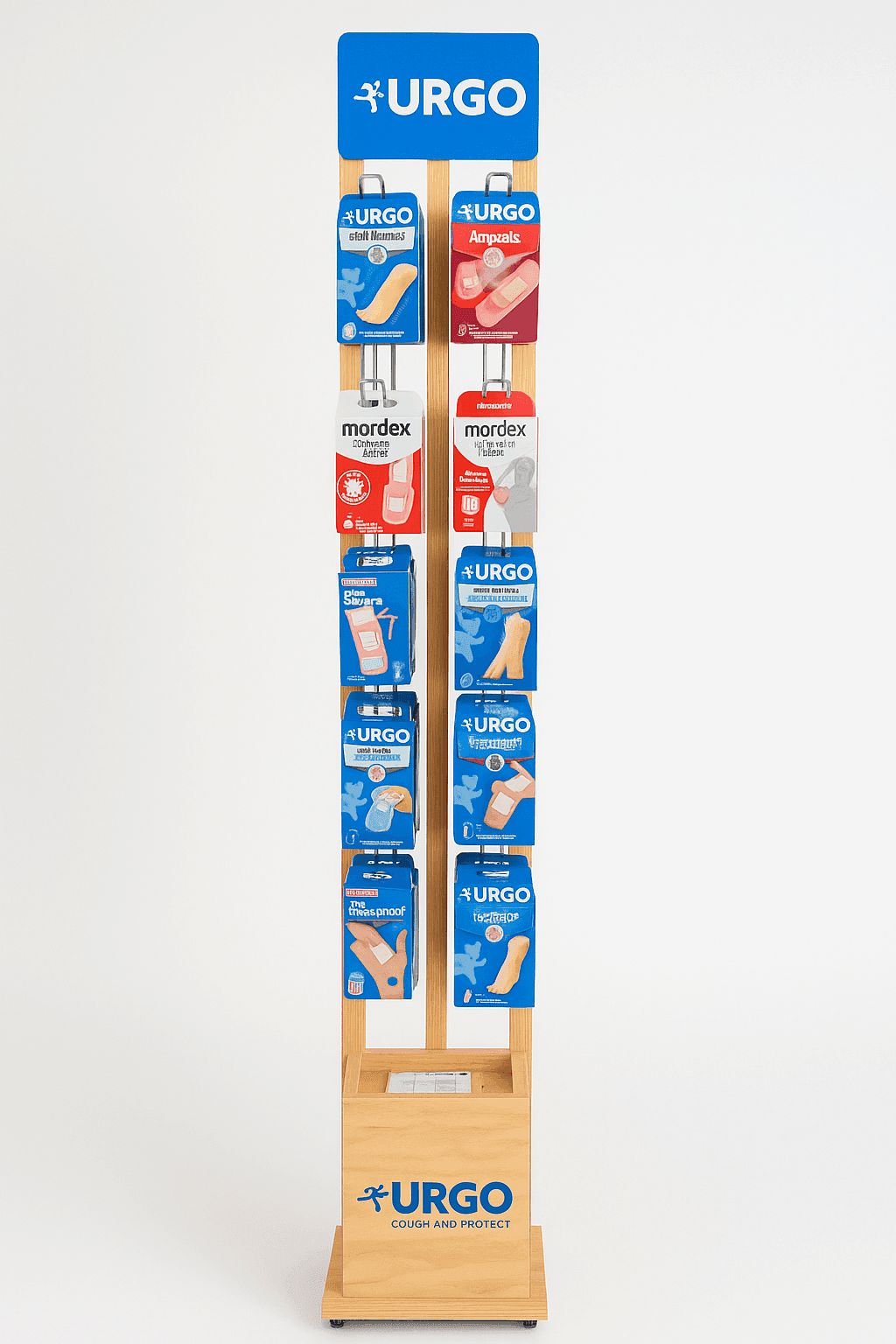
Many manufacturers create tower displays with very slim vertical structures that can still hold a large amount of product. A classic example is the one from the brand Urgo:
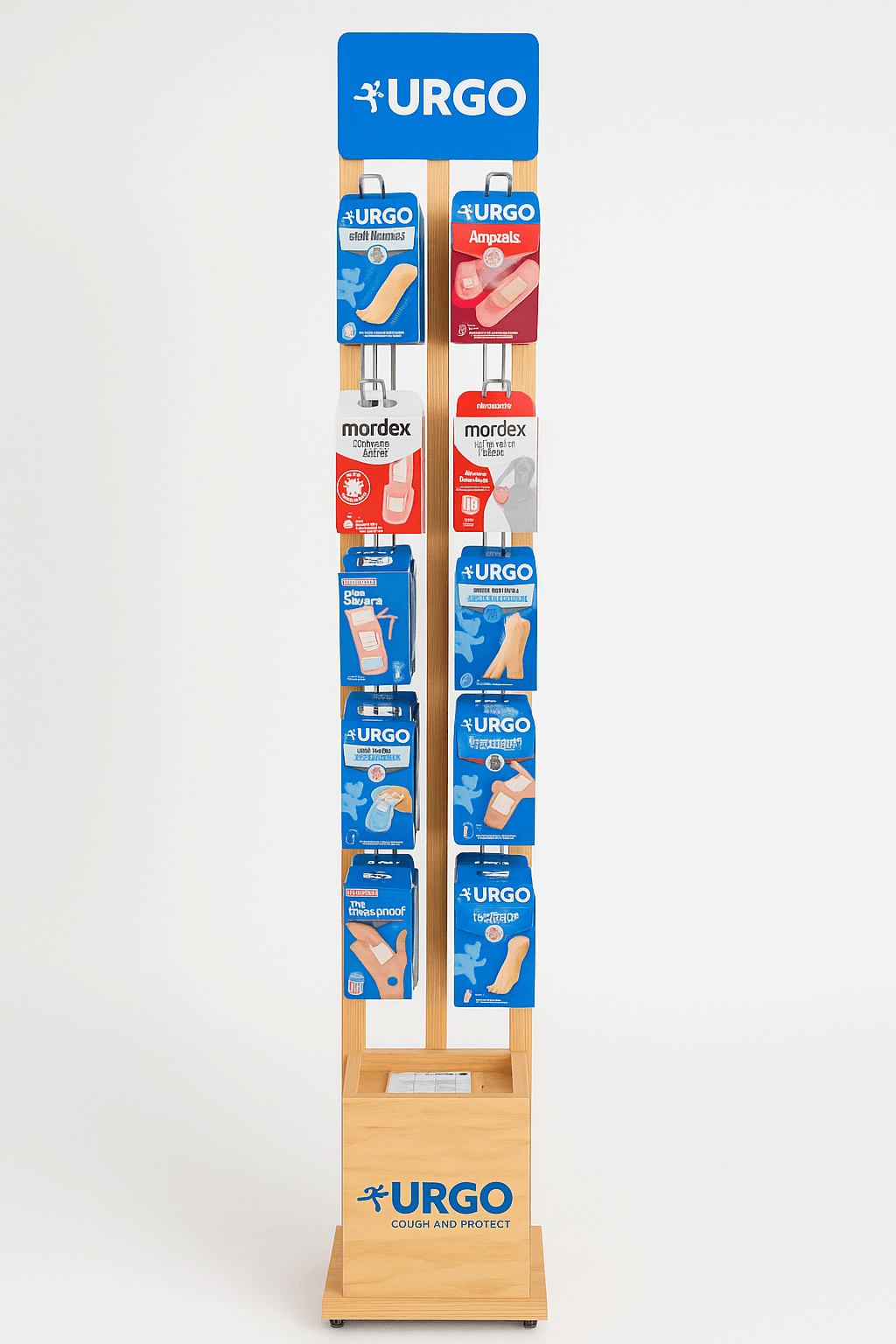
Urgo tower display
This model stands out for being made of wood, with a hook system that can be removed or repositioned to fit the size and shape of the merchandise. While it could be produced in cardboard to reduce costs, there would be a higher risk of instability and the display tipping over in high-traffic areas.
Cardboard podium as a glorifier
Another functional option for small surfaces is the cardboard podium, which can act as a glorifier, highlighting a single item or a very small set of products:
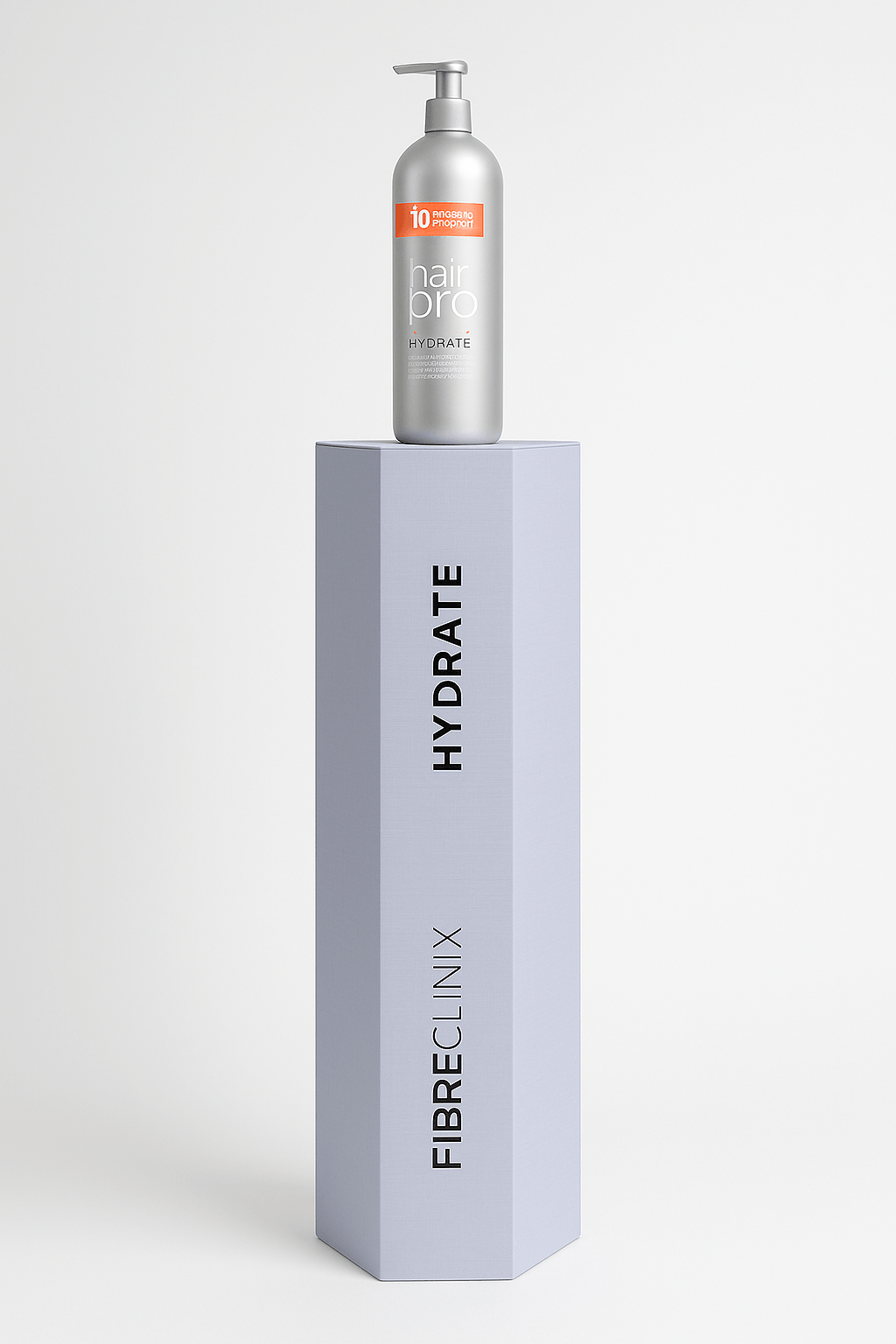
Byphasse cardboard podium
The main precaution when choosing cardboard is that the displayed product should have some weight to provide greater stability. If the items are lightweight, it is advisable to add a counterweight at the base or use more resistant and durable materials, such as plywood or recycled plastic.
If you need to use countertop displays...
When the counter is the only available space, the challenge is to avoid interfering with staff duties or obstructing customer movement during payment or inquiries. Some useful alternatives include:
Glorifier for a star product
If the goal is to promote a featured product, a small glorifier that lights up, elevates, or highlights a single item may be the best choice:
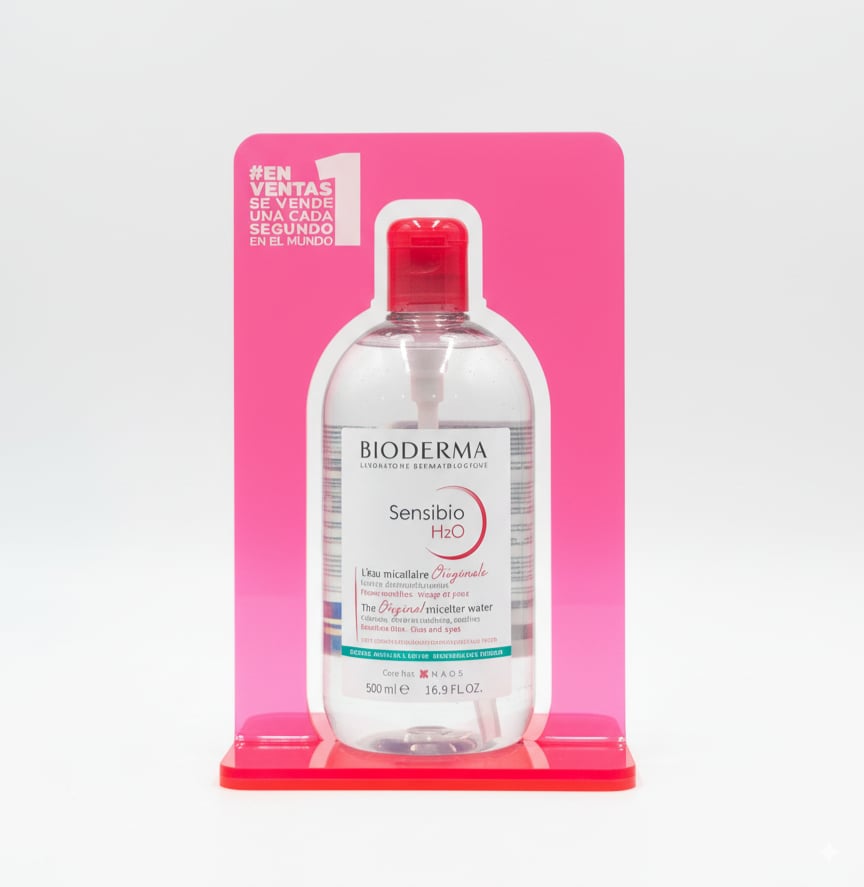
Bioderma Glorifier
The visual appeal increases the chances that the customer will notice the product and decide to purchase it, without the display taking up too much space.
Mini fishbowl for impulse buying
The classic “fishbowls” are transparent or semi-transparent containers shaped like small urns, designed for consumers to grab the product without much thought. Placing candies, personal care accessories, or small high-turnover items works very well as an impulse purchase near the checkout.
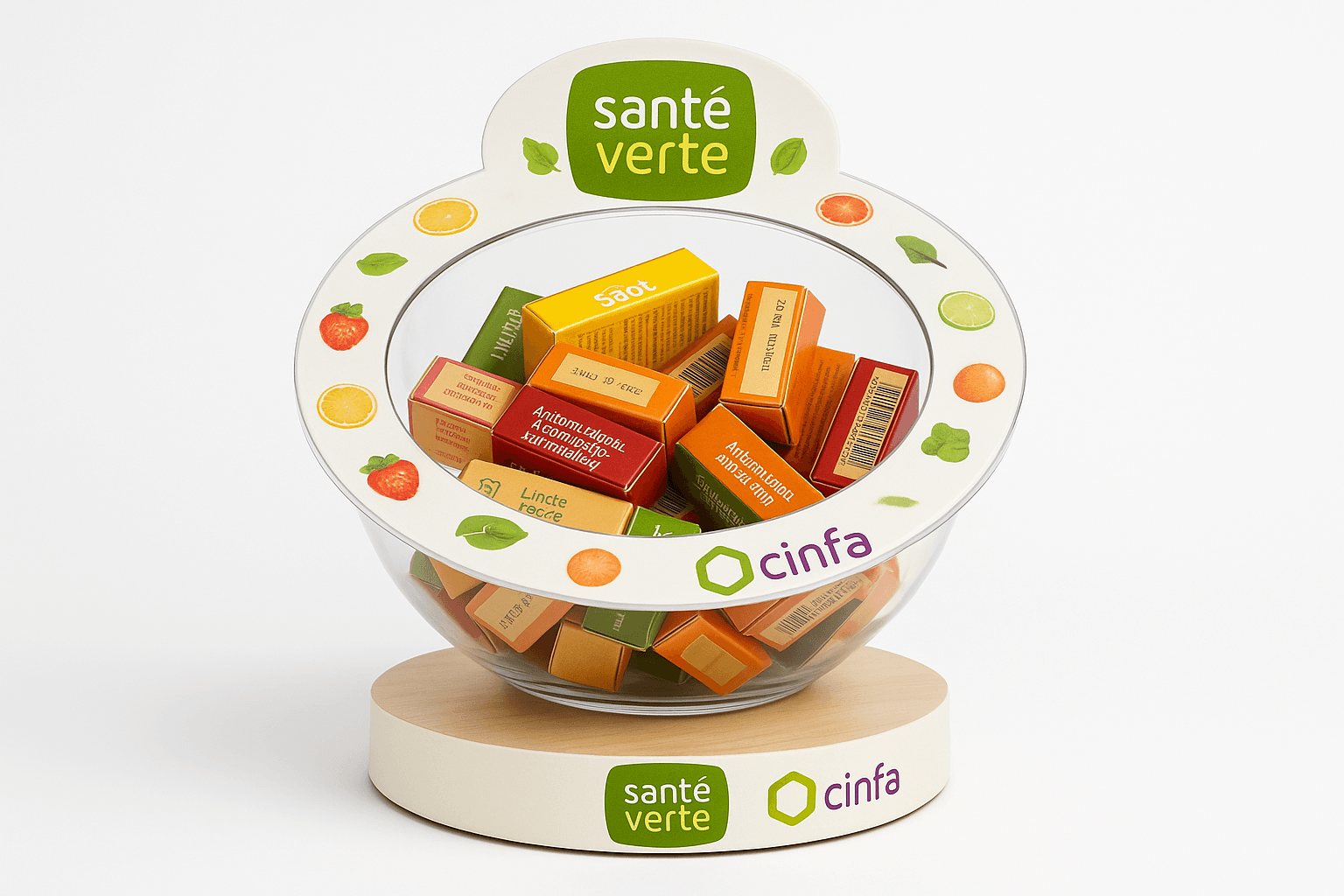
Impulse Buying Fishbowl
Sample dispenser for try-before-you-buy
For businesses that base their strategy on allowing customers to experience the product, a sample dispenser is ideal. An example can be seen with the supplement brand Collagenitos, where the clerk accesses the sample box from the back and offers them as needed. It’s also possible to opt for a front-facing dispenser that customers can access directly, as long as the space on the counter allows for it.

Collagenitos sample dispenser
Advantages of a display in small spaces
No large space is needed to make an impact. Displays designed for small areas can make a real difference in the purchase decision.
- Easy installation and restocking Their compact size allows for quick setup, easy relocation, and restocking without disrupting store operations.
- Optimizes available space They make use of areas that would normally remain empty or underutilized, increasing the profitability per square meter at the point of sale.
- Lower manufacturing and logistics costs Being smaller, they require fewer materials, weigh less, and take up less volume during transport and storage.
Is It Possible to Design an Eco-Friendly Display Even in Small Spaces?
Yes, and this is a clear example. The wooden display for Conservas Ortiz combines a compact design, responsible materials, and excellent product visibility, even in environments with limited space.
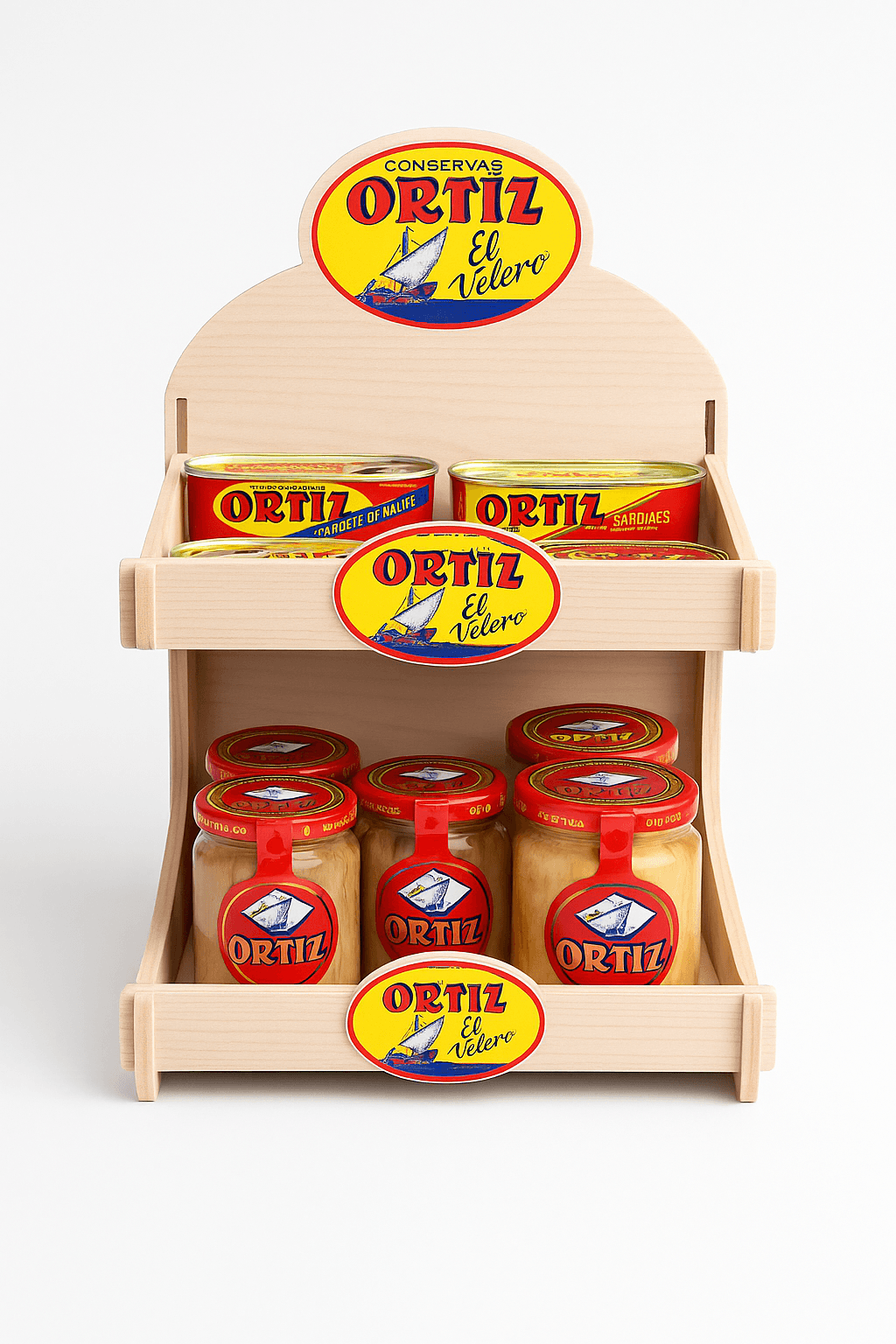
Ortiz wooden display
Despite its small size, this display offers two levels of exposure with strong visual impact. Additionally, it avoids the use of plastics or metal components, making it easier to recycle at the end of its life cycle.
Frequently Asked Questions (FAQs)
- What Types of Products Can Be Displayed in a Small Display? You can include everything from cosmetics, snacks, and beverages to pharmacy products, technology, or gourmet food items.
- What Eco-Friendly Materials Exist for Small Displays? The most common are recycled cardboard, honeycomb cardboard, FSC-certified MDF, and natural wood.
- Can a Compact Display Be Sturdy? Yes. With proper structural design, even small displays can support heavy products without deforming.
- What Types of Displays Are There for Small Spaces? The most common are countertop displays, tabletop displays, hanging displays, box displays, or mini displays for promotions.
- Can Elements Like Lighting or Signage Be Included in Small Displays? Yes. It is possible to integrate LED strips, top or front signage, and even adjustable shelves, while still optimizing the space.